
close
Choose Your Site
Global
Social Media


 |


| Quantity: | |
|---|---|
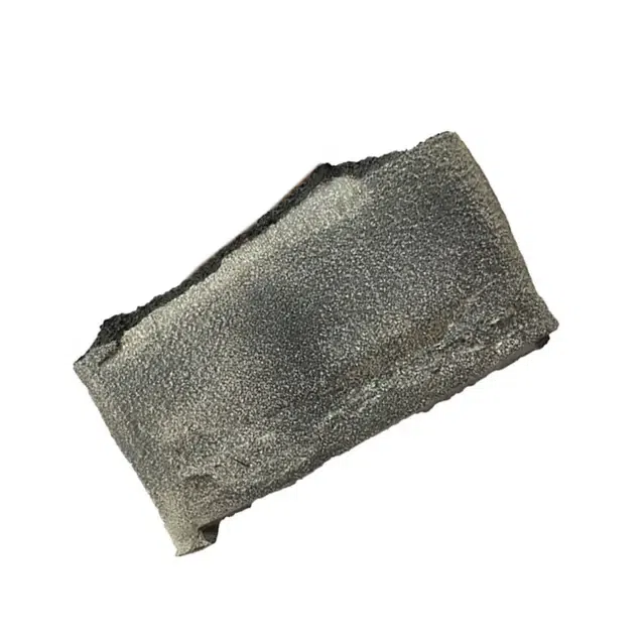
Lanthanum Metal (chemical symbol: La, CAS No.: 7439-91-0, EINECS No.: 231-099-0) is a versatile rare earth metal celebrated for its exceptional properties and wide-ranging applications. With a molecular weight of 138.91 and a density of 6.19g/cm³, this silver-gray ingot or lump metal is relatively soft and easy to cut, with a fresh cross-section that exhibits a bright silver hue. It oxidizes when exposed to air but maintains stability under controlled conditions. Available in purity grades from 99% (2N) to 99.99% (4N), high-purity lanthanum metal offers superior performance, with La/REM ratios ensuring minimal impurities. Its melting point of 920°C and boiling point of 3460°C make it suitable for high-temperature processes, while its chemical reactivity enables its use as a catalyst and alloying agent. As a foundational rare earth metal, lanthanum metal plays a pivotal role in advanced manufacturing, energy storage, and optical technologies.
Lanthanum metal is relatively soft and easy to cut, machine, and shape into custom sizes—from ingots to lumps—meeting the unique needs of diverse applications. Its malleability ensures seamless integration into manufacturing processes, reducing production time and costs.
Our high-purity lanthanum metal features TRE (Total Rare Earth) minimums of 99% across all grades, with La/TRE ratios of 99% (2N), 99.5% (2N5), and 99.9% (3N). Non-rare earth impurities such as Fe, Si, and Ca are strictly limited (e.g., Fe max 0.1% for 3N grade), ensuring optimal performance in sensitive applications like electronics and catalysts.
With a high boiling point of 3460°C and good thermal conductivity, lanthanum metal performs reliably in high-temperature environments. Its chemical reactivity makes it an effective catalyst and alloying agent, enhancing the properties of materials it is combined with—such as strength, corrosion resistance, and optical performance.
Lanthanum metal integrates seamlessly into multiple industries, from battery production to optical glass manufacturing. Its compatibility with other metals, ceramics, and chemicals makes it a flexible material, adaptable to evolving industrial needs.
Material name | Lanthanum metal |
Formula | La |
CAS No. | 7439-91-0 |
EINECS NO. | 231-099-0 |
Molecular Weight | 138.91 |
Density | 6.19g/cm3 |
Melting point | 920°C |
Bolting point | 3460°C |
Appearance | Silver gray ingot or lump, or other customized size |
Purity/Specification (La/REM) | 99%-99.99% |
Purity | 2N | 2N5 | 3N | |
TRE%min. | 99 | 99 | 99 | |
La/TRE%min. | 99 | 99.5 | 99.9 | |
Rare earth impurities | subtotal | subtotal | subtotal | |
Non rare earth | Fe | 0.3 | 0.2 | 0.1 |
Si | 0.05 | 0.03 | 0.03 | |
Ca | 0.02 | 0.02 | 0.01 | |
Mg | 0.05 | 0.05 | 0.02 | |
AI | 0.07 | 0.05 | 0.02 | |
C | 0.05 | 0.05 | 0.03 | |
S | - | 0.02 | 0.01 | |
P | 0.01 | 0.01 | ||
Zn | - | 0.05 | 0.03 | |
Cl- | 0.03 | 0.03 | ||
One of the primary applications of lanthanum metal is in the production of nickel-hydrogen batteries, used in hybrid vehicles, spacecraft, and backup power systems. It improves battery capacity, cycle life, and energy efficiency, making it a critical component in sustainable energy storage solutions.
Lanthanum metal is essential for manufacturing precision optical glass and high-refractive-index optical fiber boards. These materials are used in camera lenses, microscope optics, and advanced optical instrument prisms, delivering superior clarity and light transmission. It also serves as an additive in ceramic capacitors and piezoelectric ceramics, enhancing their electrical performance.
As an alloying agent, lanthanum metal improves the mechanical properties of special alloys—increasing strength, ductility, and resistance to corrosion and oxidation. These alloys are used in aerospace components, automotive parts, and industrial machinery, where durability under extreme conditions is required.
Lanthanum metal acts as a catalyst in various chemical reactions. For example, when doped with cadmium oxide, it catalyzes the oxidation of carbon monoxide; when combined with palladium, it facilitates the hydrogenation of carbon monoxide to methane. It is also used in catalytic converters and industrial chemical processes, reducing reaction times and improving efficiency.
Lanthanum metal oxidizes in air, so it should be stored in airtight containers in a dry, cool environment. Avoid exposure to moisture and oxygen to maintain its purity and performance. For long-term storage, vacuum-sealing is recommended.
We offer three primary grades: 2N (99%), 2N5 (99.5%), and 3N (99.9%). Each grade is tested for rare earth and non-rare earth impurities, with 3N grade providing the highest purity for critical applications.
Absolutely! Lanthanum metal is a key ingredient in high-refractive-index optical glass and optical fiber boards, which are used to make camera lenses, microscope optics, and prisms. It enhances light transmission and optical clarity, critical for precision instruments.


