

close
Choose Your Site
Global
Social Media


Views: 0 Author: Site Editor Publish Time: 2026-10-16 Origin: Site


Rare-earth compounds play a critical role in advancing high-performance optics, ceramics, and specialized electronics today. These sophisticated materials push the boundaries of modern engineering. They enable everything from clearer camera lenses to faster semiconductor chips. However, choosing between lanthanum fluoride vs lanthanum oxide is rarely a straightforward substitution.
This decision requires aligning specific optical, dielectric, and structural properties with exact manufacturing environments. A misstep here can compromise final product quality or inflate processing overhead significantly. Facility limitations often dictate which raw material works best in practice. Handling highly reactive powders requires infrastructure that not all facilities possess.
In this article, we provide materials engineers and procurement teams with an evidence-based comparison. You will learn about material stability, handling realities, and application matching. We explore the core chemical differences and environmental sensitivities to help you confidently select the right compound for your demanding production line.
When we evaluate these rare-earth materials, we must first look at their foundational characteristics. These inherent chemical traits dictate how they behave during extreme manufacturing conditions. You cannot alter these baseline properties; you must engineer your processes around them.
First, consider the fluoride compound. It features a remarkably high density and robust thermal stability. It provides excellent fluoride ion conductivity, which proves essential for specific energy applications. Crucially, it remains entirely insoluble in water. This insolubility makes it highly stable in various environments. You do not have to worry about ambient humidity ruining your raw material inventory.
Conversely, look at lanthanum oxide. It boasts a wide bandgap of approximately 4.3 eV and a remarkably high dielectric constant. It melts at an extreme 2,315°C. It also exhibits strong basicity. These unique properties make it indispensable for altering the electrical and optical behavior of other host materials. It acts as a powerful network modifier in glass matrices and thin films.
You cannot ignore the hygroscopic nature of the oxide. It aggressively absorbs ambient moisture from the air the moment you expose it. When this happens, it undergoes a rapid chemical change to form lanthanum hydroxide. This transformation permanently alters the molecular weight of the powder batch. It severely complicates precise manufacturing recipes, introducing unwanted hydrogen and oxygen variables into your formulation.
To combat this moisture absorption, you must implement strict calcination protocols. Engineers must thermally treat the oxide at high temperatures immediately prior to use. This intense heating drives off absorbed water and reverts the hydroxide back to a pure oxide. It ensures you maintain accurate stoichiometric ratios during batch mixing. If you skip this calcination step, structural swelling and inconsistent melting will ruin your entire production run.
Fluoride compounds avoid this moisture problem entirely. Their inherent environmental stability drastically lowers storage requirements. They do not demand extensive pre-processing overhead or specialized humidity-controlled silos. You can store them safely under standard ambient conditions without fear of chemical degradation.
Table 1: Baseline Properties of Lanthanum Compounds
| Property | Lanthanum Fluoride | Lanthanum Oxide |
|---|---|---|
| Chemical Formula | LaF3 | La2O3 |
| Water Solubility | Insoluble (Highly stable) | Reacts to form Hydroxide (Hygroscopic) |
| Key Strengths | IR transmittance, ion conductivity | High dielectric constant, high refractive index |
| Pre-processing Needs | Minimal | Strict calcination required before use |
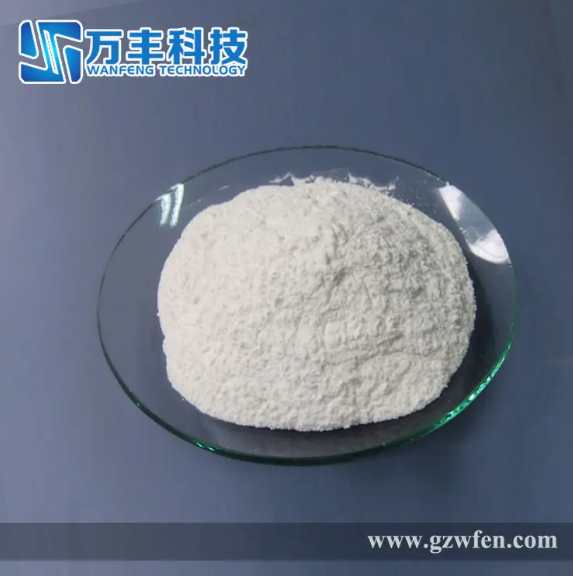
Optics manufacturers rely heavily on both materials, but they deploy them for vastly different optical goals. The oxide sets the global standard for improving density and chemical durability in precision optical glass. It significantly increases the refractive index in high-end camera lenses and microscope objectives. Best of all, it achieves this high refraction without introducing unwanted color distortion or chromatic aberration. Glassmakers use it to create thinner, lighter optical elements with superior light-bending capabilities.
Meanwhile, lanthanum fluoride fills a highly specialized optical niche. It remains a strict requirement for infrared (IR) transmitting components. Manufacturers use it extensively to produce ZBLAN heavy-metal fluoride glasses. These specialized glasses serve as the backbone for next-generation fiber-optic communication lines and medical lasers. In these advanced applications, minimal signal loss is absolutely mandatory. The crystalline fluoride matrix prevents the intense optical absorption issues commonly seen in traditional silica-based glasses.
The semiconductor industry leverages the oxide primarily for its exceptional electrical isolation traits. It serves as a vital high-k gate dielectric in modern CMOS microchip technology. As transistors shrink to atomic scales, traditional silicon dioxide leaks current via quantum tunneling. Integrating this rare-earth oxide allows engineers to miniaturize components further while maintaining strict capacitance limits and preventing electrical leakage. You will also find it in multilayer ceramic capacitors, where it stabilizes capacitance across extreme temperature fluctuations.
The fluoride compound dominates specialized ionic and electrochemical applications. It acts as a core solid electrolyte material in solid-state fluoride-ion batteries. These batteries present a potential high-density, safer alternative to volatile lithium-ion systems. Furthermore, industrial engineers use it to manufacture high-intensity arc carbon electrodes for specialized lighting. It also functions as the critical active sensing element in fluoride ion-selective electrodes. These sensors enable precise chemical analysis and real-time monitoring in municipal water treatment facilities.
Recent biomedical literature highlights exciting new diagnostic uses for these chemical compounds. Researchers increasingly utilize nanoscale fluoride particles in upconversion luminescence techniques. They attach these glowing nanoparticles to specific biological targets for high-resolution, deep-tissue imaging, avoiding the tissue damage associated with UV fluorophores. On the automotive front, the oxide plays an expanding role in exhaust gas treatment. It acts as a vital stabilizer in catalytic converters. It improves the thermal stability of alumina washcoats, helping modern vehicles meet increasingly stringent global emissions standards.
In rare-earth manufacturing, baseline purity dictates final product performance. You cannot compromise on raw material quality without suffering severe downstream consequences. Industry experts categorize trace impurities into two main groups: Rare Earth Impurities (REI) and Non-Rare Earth Impurities (NREI). NREI elements like iron, calcium, or silicon cause catastrophic functional failures. Trace iron destroys optical clarity by aggressively absorbing visible light. Trace silicon disrupts delicate electronic conductivity in microscopic thin-film dielectrics.
Commercial grades typically range from 99% to 99.9% purity. They suit basic catalytic applications, metallurgical alloying, or standard ceramic glazing. However, advanced optics, medical sensors, and semiconductors require high-purity specialized grades. These grades often reach 99.999% purity. These ultra-pure materials carry a massive cost premium because they require complex solvent extraction processes. Procurement teams must carefully weigh this financial cost-to-benefit ratio against their final product specifications. Over-specifying purity wastes critical budget; under-specifying guarantees batch rejection and product failure.
Handling ultra-fine rare-earth powders introduces specific environmental, health, and safety (EHS) risks to your workforce. Inhalation poses the primary and most immediate danger for facility workers. Ultra-fine heavy metal particulates can bypass natural respiratory defenses and lodge deep in the lungs.
To properly mitigate these serious risks, facilities must implement rigorous engineering controls. We recommend the following baseline safety practices:
Toxicity profiles differ notably between the two specific compounds. Highly basic oxides can cause severe skin and eye irritation upon physical contact with ambient moisture or sweat. Fluorides generally present lower acute contact toxicity due to their insolubility. However, they require strict chemical disposal protocols to prevent long-term groundwater contamination and comply with municipal fluoride regulations.
Selecting the correct material requires a holistic view of your engineering goals and facility constraints. Use the following decision framework to guide your procurement strategy effectively.
Once you identify the best chemical candidate, you must validate your broader supply chain. We recommend taking three immediate administrative actions. First, always request a comprehensive Certificate of Analysis (CoA) from potential suppliers to verify exact impurity limits via ICP-MS testing. Second, conduct preliminary pilot testing on small raw material batches. This step definitively confirms that the chemical impurity profile aligns with your unique process tolerances. Third, thoroughly audit the supplier's handling and packaging protocols. Ensure they consistently ship moisture-sensitive oxides in vacuum-sealed, double-layered moisture-barrier packaging.
The choice between these two advanced rare-earth materials fundamentally comes down to prioritizing distinct functional traits. It represents a strict engineering trade-off. You must carefully weigh the superior dielectric and refractive capabilities of the oxide against the highly stable, IR-friendly, ionic conductivity of the fluoride. Facilities properly equipped to handle intensely moisture-sensitive materials can fully leverage the oxide's massive optical and electronic power. Conversely, operations requiring robust environmental stability, simple storage, and unhindered infrared transparency will find the fluoride practically indispensable.
Do not make this complex material decision in a vacuum. Contact specialized materials experts to discuss your specific operational constraints and safety limitations. Request detailed technical data sheets (TDS) and safety data sheets (SDS) from reputable rare-earth suppliers. Submit your precise application specifications, purity requirements, and target metrics for customized sourcing recommendations. Taking these proactive steps ensures your chosen raw material perfectly matches your advanced manufacturing needs and scales reliably with your production volumes.
A: Yes, chemical engineers can convert the oxide into a fluoride compound. They typically achieve this by reacting the oxide with concentrated hydrofluoric acid or ammonium bifluoride at elevated temperatures. However, this conversion process requires specialized, highly corrosion-resistant equipment and extreme safety protocols. Most advanced manufacturing facilities prefer purchasing pre-synthesized, high-purity fluoride directly to ensure strict quality control and minimize severe chemical handling risks on-site.
A: Moisture absorption triggers a chemical reaction that converts the oxide into lanthanum hydroxide. This introduces unwanted hydrogen and oxygen atoms into the material matrix. It causes physical powder swelling, alters the batch weight, and disrupts precise stoichiometric calculations. In electronic applications, these moisture-induced defects drastically degrade dielectric performance and trigger structural failures. Immediate pre-use calcination remains mandatory to reverse this effect.
A: The standard shelf life depends entirely on the compound and its storage conditions. The fluoride compound boasts an effectively indefinite shelf life because it remains chemically inert and water-insoluble under ambient conditions. The oxide, however, possesses a highly restrictive shelf life. Once you open its factory vacuum seal, it rapidly degrades via moisture absorption unless you store it in a strictly controlled, zero-humidity desiccator environment.
A: Yes, alternative rare-earth materials exist depending on your exact application needs. Engineers often substitute yttrium oxide in high-temperature ceramics or specialized structural alloys. Cerium compounds frequently replace lanthanum in glass polishing powders and automotive catalytic converters due to their exceptional oxygen storage capacity. However, for maximizing refractive index without color distortion, or achieving specific IR transparency, lanthanum compounds remain the gold standard.


