
close
Choose Your Site
Global
Social Media


Views: 0 Author: Site Editor Publish Time: 2026-09-23 Origin: Site


Sourcing rare earth compounds presents a distinct challenge for procurement and engineering teams. You must perfectly align chemical specifications to rigid process realities. Overlooking minor structural details often leads to costly batch failures. Incorrect hydration levels can completely ruin an industrial formulation.
This guide dissects how hydration states directly impact industrial and laboratory outcomes. We will explore how specific purity thresholds dictate end-use performance. You must evaluate these materials logically to ensure process success.
We will balance molecular stability against application compatibility. Supply chain reliability requires careful attention to trace impurities. You will learn how to specify these materials accurately. We aim to prevent over-specification, thereby keeping your chemical formulations predictable. Navigating rare earth markets requires understanding both chemistry and practical handling limitations. By the end of this article, you will know exactly what to evaluate on a supplier's documentation.
Understanding the molecular structure of rare earth salts prevents critical manufacturing errors. The heptahydrate form contains seven water molecules bound to each lanthanum chloride molecule. Its chemical formula is LaCl₃·7H₂O. This structure creates a stable, crystalline solid at room temperature. It offers exceptionally high water solubility. Industrial buyers overwhelmingly prefer this hydrated state for standard processing.
The deliquescence factor dictates practical handling realities. Anhydrous lanthanum chloride is highly hygroscopic. It rapidly absorbs ambient moisture from the air. This rapid absorption complicates accurate mass measurements on laboratory balances. A sample weighed in a humid room will gain mass within seconds. This skews stoichiometric calculations completely. The heptahydrate state provides manageable hygroscopicity. It has already absorbed its baseline water of crystallization. This makes weighing and transfer operations far more forgiving.
Process compatibility dictates which form you should ultimately select. The water of crystallization proves highly advantageous in many scenarios. Aqueous solutions form quickly without aggressive exothermic reactions. Biological assays and municipal water treatment facilities rely heavily on this rapid dissolution. For these aqueous applications, sourcing reliable lanthanum chloride heptahydrate ensures predictable performance. Conversely, certain processes demand anhydrous materials. Specific metallurgical reductions require zero moisture. High-temperature catalytic reactions often mandate thermal dehydration prior to use. You must carefully match the hydration state to your thermal operating window.
Physical and Chemical Comparison: Heptahydrate vs. Anhydrous Lanthanum Chloride
| Property | Heptahydrate (LaCl₃·7H₂O) | Anhydrous (LaCl₃) |
|---|---|---|
| Physical Appearance | White crystalline solid | White powder |
| Moisture Sensitivity | Moderate (stable in sealed containers) | Extreme (highly deliquescent) |
| Solubility in Water | Excellent, dissolves rapidly | High, but highly exothermic |
| Primary Use Cases | Water treatment, standard catalysis, biological assays | Metallurgy, specialized anhydrous catalysis |
| Handling Difficulty | Low to Moderate | High (requires inert atmosphere) |
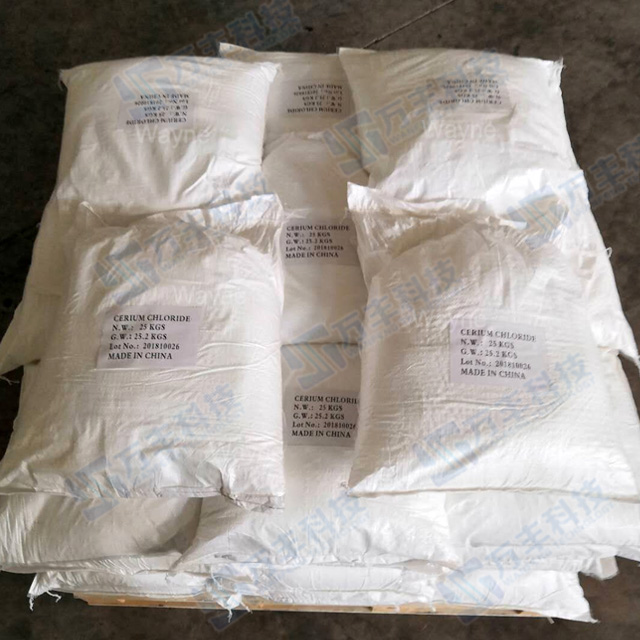
Procurement teams frequently misinterpret purity specifications in rare earth markets. We must clarify what 99.95% purity actually guarantees. This percentage rarely refers to the absolute compound mass. Instead, it usually dictates the Total Rare Earth Oxides (TREO) basis. This means out of all the rare earth elements present, 99.95% is lanthanum. The remaining 0.05% consists of other trace rare earth elements. It does not account for the hydration water or the chloride ions.
Trace impurities pose the greatest risk to industrial scalability. Rare earth refining processes struggle to separate adjacent elements on the periodic table. Cerium and neodymium frequently carry over into the final product. Calcium, iron, and heavy metals also remain if purification steps fail. Acceptable impurity limits vary drastically by use case. A water treatment facility might tolerate trace calcium. However, an optics manufacturer cannot tolerate it at all.
Performance outcomes directly link to these specific impurity tolerances. Transition metal impurities easily quench luminescence. This destroys optical application yields. Iron contamination proves disastrous for catalyst batches. Iron alters the catalytic selectivity, ruining petroleum cracking efficiency. Specifying 99.95% lanthanum chloride heptahydrate guarantees minimal interference from these competing transition metals. You must demand precise elemental breakdowns using Inductively Coupled Plasma Mass Spectrometry (ICP-MS). Top-line purity numbers mean nothing without knowing the exact trace element profile.
Different industries leverage this compound for vastly different chemical mechanisms. Fluid Catalytic Cracking (FCC) represents a massive industrial sink for lanthanum. Petroleum refineries incorporate lanthanum into zeolite structures. This incorporation stabilizes the ultrastable Y (USY) frameworks during intense thermal cycling. Zeolite stability dictates gasoline yield and octane ratings. Refineries require exceptional rare-earth consistency across thousands of tons. Any deviation in purity alters the cracking reaction dynamics.
Water treatment facilities utilize this compound for aggressive phosphate binding. Lanthanum chloride reacts with free phosphates in water bodies. It forms insoluble rhabdophane (lanthanum phosphate). This process starves algae of essential nutrients. Specialized pool treatments and municipal algae control programs rely on this mechanism. Regulatory compliance governs these applications strictly. The material must meet rigid heavy-metal safety thresholds. Elevated lead or arsenic impurities violate environmental discharge permits.
Biochemical and medical research laboratories operate on much smaller scales. They require the highest possible chemical fidelity. Cellular researchers use lanthanum as a potent calcium channel blocker. It helps map ion transport mechanisms in living cells. We must emphasize biological compatibility here. Avoid making unverified medical claims regarding therapies. The compound serves strictly as an analytical tool. Researchers demand ultra-high purity to ensure they do not introduce confounding variables into their patch-clamp assays.
Chemical stability relies entirely on your facility's environmental controls. Moisture management remains your most critical operational priority. Poor moisture control leads to severe clumping. Clumping destroys flowability, clogging automated dosing hoppers. Furthermore, fluctuations in ambient humidity alter the effective molecular weight per gram. If the heptahydrate absorbs extra moisture, a 100-gram dose contains less actual lanthanum than calculated. This hidden variable completely skews sensitive process dosing.
Facility requirements dictate baseline storage conditions. You cannot store this material in standard cardboard drums.
Handling safety requires adherence to standardized occupational protocols. Briefly review the standard Safety Data Sheet (SDS) before implementation. The material acts as a mild irritant. Fine crystalline dust can irritate the respiratory tract. Operators must wear proper skin and eye protection. Nitrile gloves and tight-fitting safety goggles are mandatory. Ensure adequate local exhaust ventilation when transferring bulk powders between vessels.
Securing a reliable supply chain requires rigorous supplier auditing. Documentation verification acts as your first line of defense. Define the essential paperwork needed before initiating any purchase order. You must demand batch-specific Certificates of Analysis (CoAs). Generic specification sheets offer zero protection. Ensure the supplier provides verifiable traceability back to the rare-earth ore processing stage. This transparency guarantees consistent extraction methodologies.
Implement strict sample testing protocols before committing to industrial volumes. Follow a phased evaluation workflow to mitigate formulation risks.
Evaluate supply chain scalability during the pilot phase. Review supplier lead times thoroughly. Rare earth supply chains often face geopolitical disruptions. Confirm their custom packaging capabilities. Proper moisture-barrier packaging prevents degradation during long ocean transits. Evaluate their consistency in meeting strict 99.95% tolerances across multiple historical lots. A supplier who cannot maintain tight statistical process control will eventually cause a line shutdown.
Understanding hydration states directly impacts your manufacturing success. You must accurately interpret TREO purity metrics to select the right grade for your specific application. Properly managing handling risks ensures predictable process outcomes and minimizes material waste.
A: The molar mass of anhydrous lanthanum chloride (LaCl₃) is approximately 245.26 g/mol. The heptahydrate form (LaCl₃·7H₂O) adds seven water molecules, contributing about 126.11 g/mol. This brings the total molar mass to roughly 371.37 g/mol. Therefore, water makes up approximately 33.9% of the compound's total weight. Chemists must account for this when calculating precise molar dosing.
A: Yes, but it requires highly controlled thermal dehydration. You cannot simply heat it in an open oven. Heating it too quickly in the presence of atmospheric moisture causes hydrolysis. This unwanted reaction forms lanthanum oxychloride (LaOCl) instead of pure anhydrous LaCl₃. Successful dehydration typically requires heating slowly under a vacuum or in a dry hydrogen chloride (HCl) gas stream.
A: No, this is a common misconception. The 99.95% purity specification refers strictly to the Total Rare Earth Oxide (TREO) basis. It means that 99.95% of the rare earth elements present are lanthanum. The remaining 0.05% consists of trace rare earths like cerium or neodymium, plus heavy metal impurities. The hydration water operates entirely independent of this purity metric.


