
close
Choose Your Site
Global
Social Media


Views: 0 Author: Site Editor Publish Time: 2026-05-07 Origin: Site


Nothing ruins the clarity of a beautiful aquarium or a vehicle windshield quite like a web of scratches. You stare through these blemishes daily. You wonder if DIY glass restoration actually works or if it is just an internet myth. Frustration builds as conflicting claims flood automotive forums and DIY blogs. Some people swear by glass polishing compounds. Others warn of ruined surfaces and wasted weekends. This guide cuts through the noise entirely. We break down the absolute realities of chemical-mechanical polishing. We expose the hidden implementation risks you face. You will learn exactly when Cerium Oxide acts as a fast fix. You will also learn when it fails completely. Finally, we analyze the true costs. We help you decide if tackling this messy job at home genuinely saves money compared to a professional replacement.
The "Fingernail Test" dictates success: Cerium oxide easily removes micro-scratches, water spots, and wiper trails, but cannot fully erase deep gouges that catch a fingernail.
Machine power is mandatory: Hand-polishing or using a household drill yields poor results; success requires a dual-action (DA) or rotary polisher.
Preparation is critical: The process is notoriously messy and requires rigorous masking to prevent permanent staining on surrounding trims.
Heat management is the biggest risk: Friction from polishing can warp laminated glass or cause shattering if not properly cooled with a water slurry.
Before you buy polishing supplies, you must define your exact defect. Setting realistic expectations prevents massive disappointment later. We often expect a perfect finish from a simple powder. The compound has strict physical limits. You cannot magically fill a deep gorge in your windshield. You can only level the surrounding area. We must frame this as a material reduction process. You remove microscopic layers of glass to reach the bottom of the scratch.
There are ideal use cases where this method excels. If you face these specific issues, you have a high success rate. Professional detailers tackle these exact problems daily.
Removing hard water spots and calcification caused by chemical degradation.
Clearing micro-abrasions causing nighttime glare or light scattering.
Fading light windshield wiper trails left by old rubber blades.
Conversely, there are poor use cases resulting in low success rates. These projects demand high effort for minimal payoff. If your damage falls into this category, rethink your strategy.
Deep scratches from rough kitchen sponges, flying rocks, or vandalism.
Scratches you can easily feel when dragging your fingernail across them.
Gouges near the immediate edge of a glass panel.
You must practice expectation management here. For deep defects, Cerium Oxide will round the sharp edges of the scratch. This rounding effect makes the damage less visible to the naked eye. It diffuses the light differently. However, it will not restore the glass to a flawless state. The physical valley remains in the panel.
People often assume glass polishing is merely physical sanding. They compare it to rubbing wood with sandpaper. It is actually a complex dual-action process. The compound undergoes a specific chemical reaction upon contact. It binds slightly with the glass surface molecularly. Simultaneously, it acts as a mild physical abrasive. Industry experts call this dual approach Chemical-Mechanical Polishing (CMP). The chemical reaction softens the topmost microscopic layer. The mechanical friction then wipes away this softened layer smoothly.
Material hardness plays a crucial role in this success. We measure this using the Mohs hardness scale. The compound is slightly harder than typical glass. This specific hardness rating allows it to level the surface effectively. It achieves this leveling without causing severe secondary damage. If you used a harder material, you would create new scratches immediately.
Material | Mohs Hardness Scale | Polishing Impact |
|---|---|---|
Standard Glass | 5.5 - 7.0 | Base material to be leveled. |
Cerium Oxide | 6.0 - 6.5 | Ideal micro-abrasive for safe leveling. |
Silicon Carbide | 9.0 - 9.5 | Too aggressive; causes secondary scratches. |
Beyond everyday glass, this material holds serious industrial authority. Professionals rely on it heavily for demanding applications. They use it extensively for precision camera optics. Semiconductor manufacturing lines use it for silicon wafer polishing. This rich industrial background establishes high trustworthiness. It proves the material handles microscopic tolerances flawlessly.
Purchasing decisions depend heavily on purity and particle size. Specific project needs dictate the right choice for your garage. Frame your evaluation around the final clarity you demand. Let us compare the distinct solution categories available to consumers.
Feature | Polishing Grade | Regular Grade |
|---|---|---|
Purity | >99.9% High Purity | Lower Purity Blend |
Particle Size | Uniform nano/micron-level | Wider size range |
Best Used For | Optical lenses, mirrors, flawless finishes | Architectural glass, standard auto glass, coarse work |
Trade-off | Higher Cost | Slightly less optical clarity |
Polishing grade offers exceptional quality. It contains greater than 99.9% purity. You get uniform nano-level particle distribution throughout the batch. Manufacturers tightly control these particle sizes. It is best for optical lenses and flawless finish requirements. You will not find rogue large particles causing random gouges. The main trade-off is a significantly higher price tag.
Regular grade serves general commercial and industrial needs. It has a much wider particle size range. It costs less per ounce. You should use it for architectural glass panels. It works fine for standard auto glass facing heavy wear. Many detailers use it for initial coarse polishing before refining the finish.
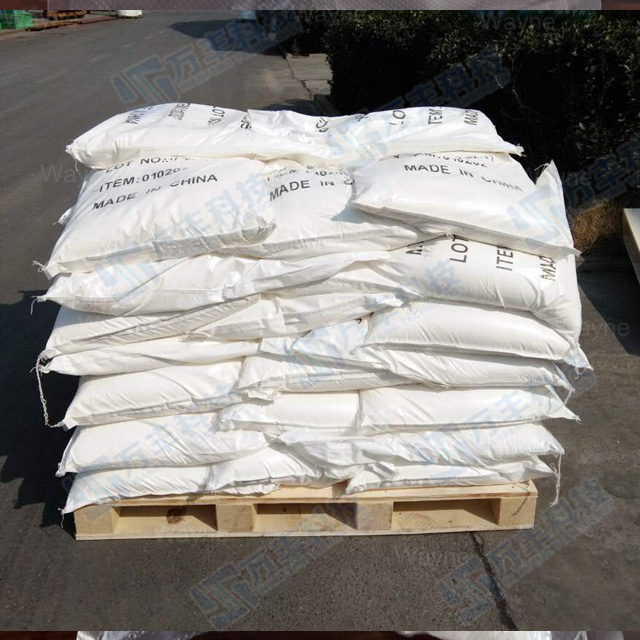
You must also choose between dry powder and pre-mixed emulsion. Mixing dry powder into a slurry offers great cost-efficiency. You control the exact thickness of your paste. Buying pre-mixed emulsions offers superior convenience. Emulsions provide excellent safety benefits. Pre-mixed options eliminate the risk of inhaling airborne dust. They also suspend the abrasive particles evenly inside the liquid.
You must understand the harsh rollout realities. We highlight these friction points intentionally. DIY buyers should not be blindsided by the grueling process. The application requires intense patience and extreme care. Mistakes happen quickly and carry permanent consequences.
Tooling failures happen frequently for beginners. The household drill myth is especially persistent online. Using a standard power drill leads to scallop-shaped indentations. You lack proper ergonomic control. You cannot maintain stable RPMs under pressure. We strongly recommend DA Orbital or Rotary polishers. Pair them exclusively with high-quality wool or thick felt pads. Foam pads absorb too much slurry and fail.
The heat hazard causes serious, irreversible damage. Localized heat buildup poses a major danger during polishing. Friction creates rapid temperature spikes on the glass surface. Failing to keep the surface cool melts the internal plastic layer. Laminated windshields contain a delicate PVB safety layer inside. Extreme heat warps this layer permanently. It can also cause the hot glass to crack completely. You must use constant water sprays.
Containment and cleanup present massive headaches. Slurry splatter gets absolutely everywhere. The spinning pad throws pink dots across your garage. You face strict necessity when taping up a vehicle. Cover all rubber trims, plastic moldings, and wipers. Use heavy automotive masking tape and plastic sheeting. If you ignore this prep work, you invite disaster. The dried slurry forms concrete-like pink stains on black plastic.
Health and safety must remain a strict priority. Inhaling dry powder carries known respiratory risks. You must treat the dry form of Cerium Oxide with respect.
Always wear a fitted particulate mask before opening the container.
Use protective eyewear to block flying slurry splatter.
Mix the dry powder with water or soap before applying.
Never buff a completely dry pad against the glass surface.
Wash your hands thoroughly after finishing the cleanup phase.
Let us calculate the true cost of ownership (TCO). This decision framework compares DIY repair against alternative professional options. You must weigh financial costs against your personal time accurately. The cheapest route is rarely the most efficient route.
The DIY investment adds up surprisingly fast. You factor in the compound cost first. Add the price of specialized wool pads. A quality DA polisher represents a significant expense if you lack one. Masking tape and plastic cleanup supplies cost money. Finally, you must value your personal time. The job often requires three to four hours of intense labor. Your weekend disappears quickly.
Professional repair offers a stress-free alternative. You should compare your DIY total against hiring an auto detailer. A glass specialist possesses industrial tools and extensive experience. They handle the mess. They finish the job safely and quickly. Sometimes paying a professional costs less than buying all the necessary DIY equipment.
Full replacement might be the smartest overall choice. We advise watching for the ultimate breaking point. If the scratch catches your fingernail easily, stop immediately. The ROI of spending four hours polishing becomes entirely negative. You will burn through pads and patience. Replacing the glass is the superior business decision. It guarantees perfect structural integrity and zero optical distortion.
The polishing compound absolutely works for the right surface defects. It eliminates annoying glare, stubborn water spots, and annoying micro-scratches effectively. You must pair it with the correct machine tools and realistic expectations. Hand polishing deep gouges will only result in sore arms and disappointment.
If your damage fits the ideal use case, take action today. Purchase a high-purity grade compound for maximum clarity. Invest in a proper DA polisher and thick felt pads. Mask your workspace carefully before you begin spinning the pad.
Deep scratches require a completely different approach. Do not waste hours chasing an impossible fix. Consult a local auto glass professional for an assessment. Seek a full windshield replacement to guarantee perfect optical clarity and safety.
A: No. Hand polishing lacks the necessary friction and speed. It is only effective for minor chemical stains or light water spots. You cannot remove physical scratches without a machine.
A: You should generally mix it with water to achieve a specific consistency. Aim for the texture of heavy cream or a thin paste. This ensures proper lubrication and cutting power.
A: Yes, if over-polished in one single spot. It can alter the optical clarity permanently. This causes a dangerous "funhouse mirror" effect. You must always blend the leveling outward smoothly.


