
close
Choose Your Site
Global
Social Media


Views: 0 Author: Site Editor Publish Time: 2026-04-27 Origin: Site


In heavily regulated sectors like pharmaceutical quality assurance and environmental monitoring, data integrity is everything. Spectrophotometer wavelength drift introduces massive compliance risks. Even a minor deviation can compromise chemical formulations. It can quickly trigger severe regulatory audit penalties. To mitigate this pervasive risk, Holmium Oxide serves as the ubiquitous, 40-year industry benchmark. It verifies UV/Vis instrument accuracy with unmatched reliability.
Lab managers and procurement teams rely on it daily to establish definitive operational baselines. This technical evaluation details exactly why this rare-earth material remains the absolute gold standard. We will explore its underlying scientific properties. We will explain how to choose between its solid glass and liquid forms. You will also discover the strict operational boundaries required to maintain full compliance. By understanding these principles, you can implement robust calibration protocols. You will reduce total cost of ownership while ensuring your analytical data consistently meets international metrology standards.
Broad Spectral Range: Holmium Oxide provides 11 to 14 sharp, symmetrical, and verifiable absorption peaks spanning the crucial 240 nm to 650 nm range.
Intrinsic Stability: Its exceptional resistance to temperature and concentration fluctuations eliminates the need for frequent, costly external recertification.
Strict Limitations: It is strictly a wavelength reference standard, inherently unsuitable for photometric (transmittance) calibration.
Form Factor Choice: Laboratories must choose between glass filters and sealed liquid solutions based on matching their routine optical analysis configurations.
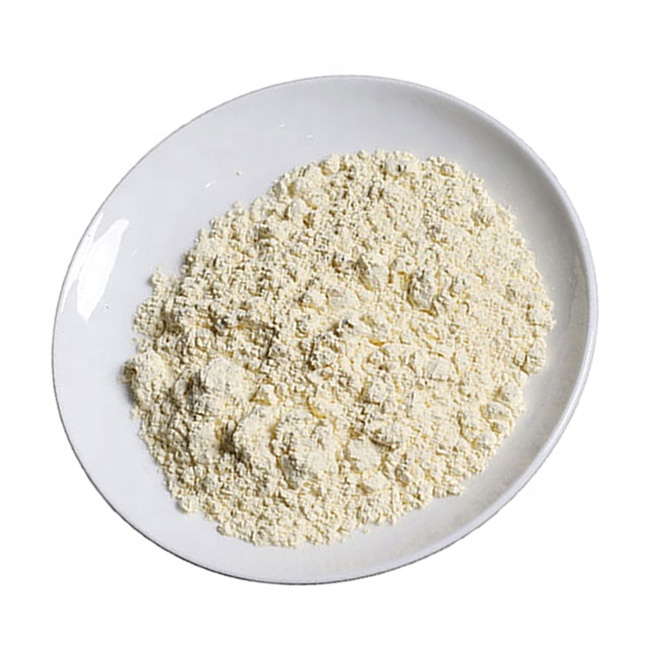
The compounding risks of uncalibrated spectrophotometers threaten laboratory operational viability. Batch rejections cost companies millions annually. An uncalibrated instrument produces skewed absorbance data. This leads quality assurance teams to approve faulty products or scrap perfectly viable batches. During regulatory audits, inspectors demand rigorous proof of instrument calibration. Failing to provide reliable, traceable wavelength logs guarantees a non-compliance citation. Data integrity requires a robust, defensible foundation.
Historically, laboratories relied heavily on atomic emission lamps for routine calibration checks. These legacy tools required complex physical setups. Technicians had to manually align lamps to achieve accurate readings. This process frequently introduced physical slit positioning errors. It also demanded significant instrument downtime, bottlenecking laboratory throughput. Modern standard reference materials eliminated these operational headaches. Using a trusted standard reference material allows instant verification. It removes the mechanical variables associated with physical lamp alignments.
A successful calibration standard operating procedure (SOP) requires three core elements. First, it needs seamless integration into daily laboratory workflows. It should not require specialized teardowns. Second, it demands direct traceability to international metrology bodies like SI or NIST. Third, it must guarantee minimal instrument downtime. Achieving these three pillars ensures a compliant and highly efficient lab environment. Your laboratory secures defensible data for every regulatory review when you meet these criteria.
The unique rare-earth properties of Holmium Oxide dictate its superior metrological performance. Electron transitions within its atomic structure are highly shielded. This produces exceptionally sharp, reliable absorption bands. These characteristic peaks span from the lower UV range straight through the visible spectrum. You will typically find verified peaks between 240 nm and 640 or 650 nm. This broad spectral coverage allows technicians to test the entire operational range of most UV-Vis spectrophotometers simultaneously.
Environmental stability serves as another critical driver for laboratory adoption. Standardized test data from historical metrology benchmarks prove this material's exceptional resilience. Laboratories experience routine ambient temperature fluctuations. Extensive metrological testing shows temperature shifts between 20°C and 30°C do not shift the wavelength coordinates of the absorption peaks. Furthermore, minor concentration variances leave the exact X-axis coordinate positioning unchanged. This intrinsic stability makes it an undisputed champion for daily environmental monitoring.
Modern spectrophotometer software depends entirely on clear signal processing. Peak-finding algorithms require distinct minimum transmission values to function correctly. This specific compound provides exactly that. Its distinct and asymmetrical valleys allow software algorithms to lock onto coordinates consistently. They accomplish this without registering false positives or background noise errors. The mathematical reliability of these transmission minimums ensures your readout consistency remains flawless across different instrument brands.
Laboratories must decide between solid-state filters and sealed cuvettes. Each format serves distinct analytical workflows. Aligning your choice with your dominant testing method minimizes baseline errors.
Manufacturers create these reference tools by doping a stable glass matrix.
Pros: They offer tremendous solid-state durability. They are highly portable and easy to store in standard lab drawers. You face practically zero risk of chemical degradation, leakage, or evaporation over time.
Cons: They possess a slightly different refractive index compared to typical liquid sample tests. If your lab predominantly tests liquid samples, this slight optical mismatch can introduce minor baseline discrepancies during highly sensitive readings.
These reference standards consist of a highly controlled chemical blend. Manufacturers typically validate a precise formulation containing 4% Holmium Oxide dissolved in 10% perchloric acid.
Pros: Providers encase this liquid in premium quartz cuvettes. This format precisely mimics the optical configuration of routine liquid sample analysis. It aligns perfectly with your everyday liquid testing protocols, reducing refractive errors.
Cons: The liquid format requires slightly more care during daily handling. You must protect the quartz cuvette from surface scratching. You must also avoid extreme storage temperatures to prevent quartz degradation or seal contamination.
Format Comparison Matrix
Feature | Glass Filters | Liquid Solutions (Sealed Cuvette) |
|---|---|---|
Physical Durability | Extremely high; shatter-resistant. | Moderate; requires careful quartz handling. |
Optical Alignment | Solid-state refractive index. | Mimics liquid analysis perfectly. |
Degradation Risk | Practically zero. | Low, but seal integrity matters. |
Primary Use Case | Field testing, rugged lab environments. | High-precision pharmaceutical liquid assays. |
Instrument spectral bandwidth acts as your primary variable affecting wavelength accuracy. You must carefully control this parameter during scanning. Metrology best practices specify keeping instrument bandwidths at ≤ 2 nm. Ideally, you should maintain bandwidths below 1 nm. Exceeding these limits broadens the absorption band. This broadening causes severe peak asymmetry. The asymmetry directly triggers coordinate shifts, confusing your software's peak-finding algorithms. Strict bandwidth restriction keeps wavelength displacement safely under 0.2 nm, securing audit compliance.
We must explicitly state a strict operational limitation. You must never use Holmium Oxide to calibrate photometric or transmittance scales. It functions purely as a wavelength (X-axis) reference standard. Transmittance depths (the Y-axis) vary wildly due to minor temperature changes. Trace impurities or slight cuvette imperfections also drastically alter the absorbance intensity. Relying on it for photometric calibration guarantees systemic errors across your entire laboratory framework.
Quality assurance teams frequently raise a specific concern regarding solution color. They notice liquid reference standards look bright pink under fluorescent laboratory lighting. Later, the same solution appears amber under natural or incandescent light. We must preempt this common QA panic. Clarify to your teams this is merely harmless spectral filtering. Different light sources emit distinct wavelengths. The rare-earth solution selectively absorbs these specific wavelengths. It is absolutely not a sign of chemical degradation or compromised integrity.
Procurement managers and lab directors must view calibration standards through a financial lens. National metrology institutes recognize these specific materials as "intrinsic wavelength standards." An intrinsic standard possesses an inherently stable physical property. Because its spectral profile remains perpetually stable, bodies like NIST often do not require repeated recertification. This classification drastically reduces your lifetime consumable costs. You completely avoid the recurring, expensive logistics of shipping reference materials out for annual external validation.
When procuring new standards, examine the Certificate of Analysis (CoA) rigorously. You must look for stated uncertainties that align with your strictest compliance requirements. A high-quality CoA should explicitly state ±0.1 nm thresholds at a 95% confidence interval. Demand complete transparency regarding the mathematical algorithms used to determine these peak values. This documentation forms your primary defense during external regulatory audits.
Translating these technical drivers into a standard operating procedure (SOP) ensures long-term analytical success. Implement this foundational checklist to secure your workflows:
Always run your initial background scan against a verified air blank.
Utilize a standardized, slow scan rate to prevent peak shifting.
Match your spectrophotometer bandwidth precisely to the CoA specifications (≤ 2 nm).
Establish a historical wavelength accuracy log immediately upon receipt of the standard.
Execute a routine verification schedule to preemptively detect instrument drift before an official audit occurs.
Wavelength Accuracy Audit Chart (Template)
Audit Date | Target Peak (nm) | Actual Readout (nm) | Calculated Deviation | Pass / Fail Status |
|---|---|---|---|---|
[YYYY-MM-DD] | 279.3 | [Data Entry] | [Data Entry] | [Status] |
[YYYY-MM-DD] | 360.8 | [Data Entry] | [Data Entry] | [Status] |
[YYYY-MM-DD] | 536.5 | [Data Entry] | [Data Entry] | [Status] |
Using an intrinsic reference material balances scientific rigor with incredible cost efficiency. It protects your data integrity seamlessly across the vital 240 nm to 650 nm spectrum. Wavelength drift poses an invisible but catastrophic threat to laboratory compliance. However, armed with the right standard, you mitigate this risk entirely.
Audit your current optical configurations today. Align your specific standard choice—whether solid glass or sealed liquid—with your dominant daily workflows. Lock in your scanning bandwidths under 2 nm. Finally, aggressively train your technicians on the photometric fallacy to prevent accidental misuse. By executing these steps, you transform wavelength calibration from an audit vulnerability into a guaranteed operational strength.
A: This visual shift is a harmless optical phenomenon known as spectral filtering. Under fluorescent lab lighting, specific wavelength absorptions make the liquid appear bright pink. Under natural or incandescent light, it looks amber. It does not indicate colorimetric degradation. It remains entirely safe and accurate for wavelength verification regardless of these environmental lighting changes.
A: Absolutely not. It is strictly designed as a wavelength (X-axis) reference standard. While its wavelength peak coordinates are exceptionally stable, its absorbance depth (Y-axis) is highly sensitive. Slight temperature changes and minor impurities cause wild transmittance variations. Using it for photometric calibration will compromise your entire analytical baseline.
A: They possess extremely long lifespans because they function as intrinsic optical standards. Their chemical and physical properties do not naturally degrade over time. You only need to replace them if they suffer physical damage, severe surface scratching, chemical contamination, or prolonged exposure to extreme heat and intense UV degradation. Otherwise, they provide reliable data for decades.


