
close
Choose Your Site
Global
Social Media


Views: 0 Author: Site Editor Publish Time: 2026-08-10 Origin: Site


Modern material sourcing has shifted from basic commodity buying to strategic procurement. Advanced manufacturing relies on rare earth elements not just for performance, but for competitive differentiation. Moving from raw element chemistry to practical industrial application reveals unique challenges. Trace additions of specific oxides drastically alter the thermal, magnetic, and structural properties of your baseline materials. Engineers face intense pressure to balance purity requirements against supply chain resilience. They must validate precise technical specifications to ensure manufacturing ROI.
We will explore how material evaluation directly influences your production outcomes. You will discover practical methods to decode purity grades and mitigate adoption risks. Understanding these variables separates market leaders from lagging competitors. You will learn how to audit supply chains properly. Ultimately, this guide helps you secure the exact materials needed to scale operations reliably and make confident, data-backed procurement decisions.
Standard ceramics, glass, and metallurgical alloys often hit hard performance ceilings. Extreme environments expose their structural limits quickly. High heat degrades standard metals, leading to premature fatigue. Corrosive atmospheres destroy unprotected components within months. Furthermore, modern renewable energy applications demand materials capable of surviving decades of physical stress. You cannot rely on basic material formulations anymore.
How do we bridge this massive performance gap? The answer lies in targeted elemental doping. Integrating industrial materials rare earth oxide compounds transforms their fundamental behavior. Elements like Yttrium, Cerium, and Neodymium act as powerful micro-modifiers. They slip into the crystal lattice of baseline materials. This stabilizes structures at high temperatures and drastically alters electromagnetic profiles.
Let us look at specific feature-to-outcome mappings across major industries:
We must also weigh the economic reality. High-value oxides cost more upfront. However, the cost-to-benefit ratio heavily favors integration. You drastically reduce component failure rates. You extend end-product lifecycles. This secures a strong return on investment across bulk manufacturing lines, easily justifying the initial procurement premium.
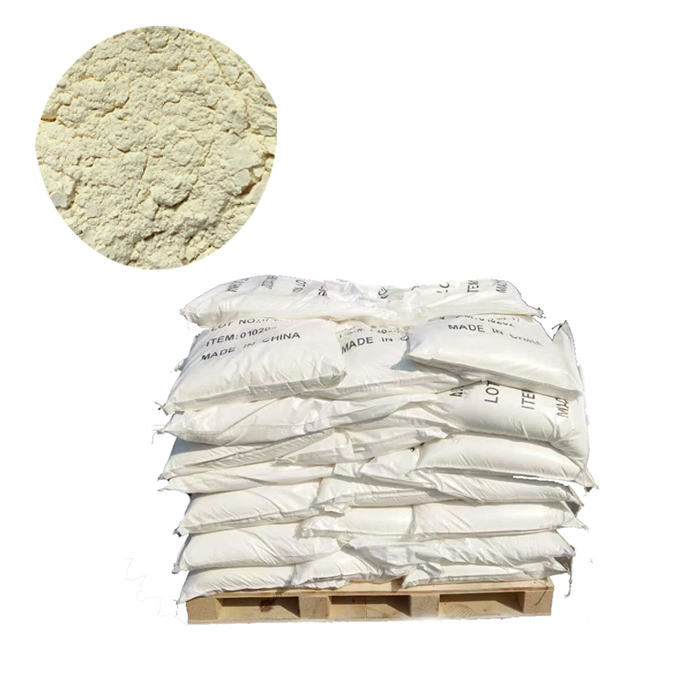
Why does a "one-size-fits-all" procurement strategy fail? Every manufacturing application demands specific chemical and physical parameters. Understanding rare earth oxide specifications prevents highly expensive errors. You must evaluate incoming materials against your exact production requirements to avoid process failures.
Purity grades dictate application suitability. Total Rare Earth Oxide (TREO) percentage serves as your baseline metric. Ultra-high purity (99.999% TREO) is strictly necessary for advanced electronics. Fiber optics also require these extreme grades to prevent signal attenuation. Conversely, standard commercial grades (99%–99.9%) suffice for bulk ceramics or metallurgy. Buying 99.999% purity for steelmaking wastes capital. You protect your margins by perfectly matching purity levels to the final application.
| Purity Grade (TREO) | Primary Industrial Applications | Cost and Margin Impact |
|---|---|---|
| 99% - 99.5% | Metallurgy, Glass Decolorization, Abrasives | Highly economical for bulk manufacturing. Protects base margins. |
| 99.9% - 99.99% | Advanced Ceramics, Catalysts, Magnets | Moderate premium. Balances high performance against raw costs. |
| 99.999% (5N) | Fiber Optics, Semiconductors, Lasers | Significant premium. Requires stringent environmental control. |
Physical properties are equally critical to your success. You must analyze the Particle Size Distribution (PSD). PSD determines how the powder flows and melts. Specific surface area (BET) dictates chemical reactivity, which is vital for catalysts. Morphology influences how the oxide behaves during mixing, sintering, or coating processes. Spherical particles flow far better than irregular ones.
Finally, you must demand rigorous verification. Relying solely on supplier promises is dangerous. Rigorous, third-party lab testing ensures compliance using standards like Inductively Coupled Plasma Mass Spectrometry (ICP-MS). You must request comprehensive Certificates of Analysis (CoAs) per batch. This transparency prevents line-down situations caused by unexpected impurities.
Standard off-the-shelf oxides may not align with your specific engineering needs. Proprietary manufacturing processes often require tailored solutions. Next-generation technologies push materials to their absolute physical limits. Solid-oxide fuel cells (SOFCs) need unique oxygen ion conductivity profiles. Specialized electric vehicle (EV) motor components demand precise magnetic geometries. Here, customized formulations become essential.
Consider the structural advantages of co-precipitation and doping. Sourcing a custom rare earth oxide compound eliminates production guesswork. Pre-mixed, co-precipitated materials offer completely uniform atomic distribution. Attempting high-variance in-house blending often leads to uneven performance. Dry powders tend to separate based on density during mixing. Co-precipitated compounds lock the elements together permanently.
How do you structure pilot runs effectively? The prototyping phase requires careful, systematic planning. You must move seamlessly from R&D to commercial production.
This phased, methodical approach protects your capital. It guarantees the custom material scales up without breaking your existing manufacturing process.
We must acknowledge harsh geopolitical realities. The global rare earth supply chain contains inherent vulnerabilities. Production is heavily concentrated in a few specific regions globally. This creates massive risk for manufacturers relying on steady inputs. Diversification is no longer an optional strategy. It is a mandatory procurement metric. You must build alternative sourcing channels to protect your assembly lines.
Traceability directly impacts your brand reputation. You must evaluate material origin meticulously. Opaque, non-compliant mining practices carry severe legal and ethical risks. You must ensure your materials come from documented, legal sources. Demand origin certificates from your partners. Audit the initial stages of your supply chain to verify ethical labor practices.
Environmental, Social, and Governance (ESG) factors now drive major purchasing decisions. Modern material sourcing demands strict environmental responsibility. Buyers actively look for non-toxic processing methods. Environmentally responsible refining minimizes long-term ecological damage. Closed-loop recycling capabilities offer a massive competitive advantage. Reusing rare earth elements reduces dependence on raw mining. It also lowers your overall carbon footprint. Proving ESG compliance highlights your commitment to sustainable manufacturing.
Finding the right partner remains a complex challenge. You must carefully separate transactional brokers from strategic partners. A transactional broker simply moves powder from one warehouse to another. A true rare earth oxide supplier acts as a manufacturing-grade partner. They deeply understand your end-use applications and unique pain points.
Lot-to-lot consistency stands as the ultimate test of quality. Any company can produce one acceptable batch. A strategic partner delivers uniform material profiles over multi-year contracts. They utilize Six Sigma principles to control production variation. Consistent rare earth oxide deliveries keep your production line running smoothly.
Technical support also distinguishes top-tier partners from average vendors. Do they offer metallurgical or chemical engineering support? Can they troubleshoot complex integration issues on your production floor? A strong partner helps you optimize your sintering curves. They advise on mixing protocols to prevent material waste.
Finally, meticulously assess their logistics and lead times. The rare earth market is highly volatile. You must evaluate their inventory buffering strategies. Do they hold safety stock exclusively for you? Check their local warehousing capabilities. Realistic Service Level Agreement (SLA) guarantees protect you from sudden market shortages. Reliable delivery schedules are just as important as chemical purity.
Integrating rare earth oxides acts as a strategic lever for product superiority. These elements push baseline materials far beyond their standard capabilities. You gain incredible thermal resistance, precise optical clarity, and robust structural integrity. However, manufacturing success requires careful, data-driven planning. Provided the specifications match your application, you will see immediate performance gains. You must also ensure your supply chain remains highly secure and ESG-compliant.
Now is the time to transition from preliminary research to rigorous evaluation. Do not settle for vague material data from unverified sources. Audit your current supply lines today. Evaluate your specific thermal, mechanical, and magnetic needs.
We encourage engineers and procurement officers to take decisive action. Request Technical Data Sheets (TDS) for your required oxides. Review standard CoAs from potential partners carefully. Consult directly with materials engineers to secure a pilot sample for your next production run.
A: Typical lead times range from four to twelve weeks, depending on purity levels and overall volume requirements. Highly customized or ultra-high purity oxides often require longer processing windows. To mitigate costly delays, we strongly advise partnering with a supplier that maintains strategic inventory buffering and localized warehousing.
A: Always test your baseline manufacturing requirements first. Over-speccing purity exponentially increases your material costs without delivering a guaranteed return on investment. Commercial grades (99%) work exceptionally well for metallurgy, while advanced electronics demand strict 99.999% purity. Consult with a chemical engineer to define your exact threshold.
A: Yes. Particle Size Distribution (PSD) heavily influences how the powder disperses within your baseline material. It directly affects melting points, powder flowability, and final material homogeneity. Selecting the correct particle morphology ensures smooth integration during mixing, sintering, and advanced coating processes.
A: A credible supplier must always provide comprehensive documentation. This includes ISO certifications, verifiable origin documents, and batch-specific Certificates of Analysis (CoAs). Transparent traceability ensures your procurement process adheres to strict global ESG standards and avoids highly unethical, non-compliant mining practices.


