
close
Choose Your Site
Global
Social Media


Views: 0 Author: Site Editor Publish Time: 2026-07-02 Origin: Site


In industries ranging from advanced catalysis to optoelectronics, the precise specification of rare earth materials dictates downstream product viability. A tiny miscalculation in chemical purity can derail an entire production run. These elements play an invisible but foundational role in modern manufacturing, where trace impurities often translate to catastrophic performance failures.
Sourcing these vital materials is not merely about finding a matching chemical name. It requires balancing strict purity thresholds, dynamic hydration states, and necessary supply chain scalability. You must navigate a complex landscape of commercial grading and handling requirements to ensure consistent factory output. Procurement teams frequently struggle to align theoretical laboratory specifications with commercial reality.
This article provides an evidence-based framework for evaluating industrial specifications. We will match specific compounds to distinct use cases and establish criteria for shortlisting reliable supply partners. You will learn how to optimize procurement for commercial-scale deployment without sacrificing product integrity.
Purity dictates performance: Trace elemental impurities can cause catastrophic failures in sensitive applications like electronics; exact grading (3N to 5N) is mandatory.
Application matching: Different nitrates (e.g., Lanthanum Nitrate vs. Cerium Nitrate) solve entirely different industrial problems, from catalytic cracking to surface polishing.
Handling realities: Rare earth nitrates are typically hygroscopic and highly reactive, requiring rigorous storage, EHS compliance, and moisture control.
Supplier vetting: True scalability requires verifiable batch-to-batch consistency, proven via detailed Certificates of Analysis (COA) and traceable sourcing.
When you evaluate raw materials for high-tech manufacturing, purity is the ultimate baseline. Sourcing highly refined Rare Earth Nitrates represents a significant investment. However, failing to control purity profiles often results in exponentially higher operational losses later in the production cycle.
Micro-contaminants degrade performance severely. Heavy metals, alkaline earths, and non-target rare earth elements introduce unpredictable variables into sensitive reactions. In semiconductor manufacturing or specialized glass production, a few parts per million (ppm) of iron or calcium can alter optical transmission or electrical conductivity. Such deviations lead directly to costly batch rejections.
Consider the production of luminescent materials. If your source material contains trace amounts of a competing rare earth element, it can quench the desired fluorescence. This forces quality control teams to scrap entire production lots. The cost of impurities extends beyond the raw material price. You lose machine time, energy, and labor.
Industrial specifications rely on a standardized grading system. Manufacturers express purity in "nines" (N). You verify these grades using advanced analytical equipment like Inductively Coupled Plasma Mass Spectrometry (ICP-MS) or Optical Emission Spectrometry (ICP-OES).
3N (99.9%): This grade forms the standard baseline for many broad industrial applications. It works well for foundational metallurgy, basic agricultural additives, and certain robust catalyst formulations.
4N (99.99%): Manufacturers use this intermediate grade for high-performance ceramics, structural components, and advanced glass manufacturing where moderate trace element control is vital.
5N (99.999%): This ultra-high purity grade serves the most demanding sectors. Optoelectronics, laser crystals, and advanced semiconductor processes require strict limits on every trace metal.
More purity is not always better for your budget. Many procurement teams fall into the over-specification trap. They purchase 5N purity when 3N is completely sufficient for their application. Ultra-high purity grades require complex, multi-stage solvent extraction processes. These extraction steps increase the final price exponentially.
You must perform a pragmatic cost-benefit analysis. If you manufacture basic agricultural fertilizers, trace amounts of other rare earths will not harm your product. Optimizing your procurement budget means buying the exact grade your formulation requires, not the highest grade available in the catalog.
Best Practice: Always test lower purity grades during the R&D phase to find the absolute minimum threshold acceptable for your process.
Common Mistake: Copying an academic research paper's material list (which often uses 5N) for a commercial-scale industrial project.
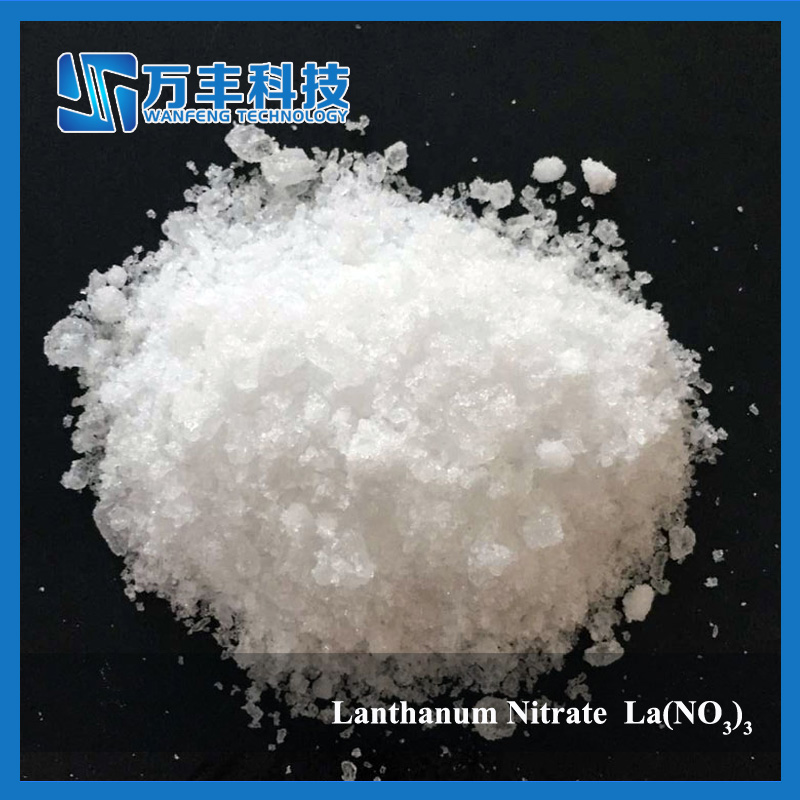
Selecting the correct chemical requires looking past the basic product name. You must evaluate the compound's structural realities and compositional baselines to ensure it behaves predictably on the factory floor.
Total Rare Earth Oxide (TREO) serves as the foundational metric for assessing concentration. Because these nitrates often contain varying levels of bound water, weighing a raw drum does not tell you exactly how much active rare earth element you are buying. TREO provides a standardized measure of the actual rare earth value inside the bulk material.
When you dose a chemical reaction, you base your stoichiometric calculations on the active element. If a supplier provides a batch with a lower TREO percentage than expected, your resulting product will lack the necessary catalytic or structural properties. You must insist on exact TREO minimums on every Certificate of Analysis.
These compounds rarely exist in a perfectly dry state. They frequently take the form of hexahydrate formulations (containing six molecules of water). The hydration state drastically impacts your daily operations.
Water of crystallization affects solubility rates, physical weight calculations, and dosing precision. If your material absorbs additional moisture from humid factory air, it becomes heavier. A technician weighing 100 kilograms of damp material will actually introduce far less active element into the reaction compared to dry material. This moisture drift ruins chemical precision.
Industrial processes usually dissolve these compounds into aqueous solutions. Complete solubility without turbidity is mandatory. Cloudy solutions indicate the presence of insoluble impurities or degraded material.
Furthermore, you must evaluate the free acid limits. Manufacturing these nitrates involves dissolving rare earth oxides in nitric acid. If the supplier fails to neutralize the final product properly, residual free acid remains. High free acid levels will rapidly corrode stainless steel mixing tanks, pumps, and downstream processing equipment. Controlling pH ranges protects your capital machinery investments.
Evaluation Metric | Industrial Impact | Ideal Target Parameter |
|---|---|---|
TREO Percentage | Determines active element yield per kilogram. | Consistent across batches (e.g., >38% or >42% depending on element). |
Hydration State | Alters total molecular weight and dosing math. | Stable, clearly defined crystal water content (e.g., Hexahydrate). |
Free Acid (pH) | Dictates equipment corrosion risk during mixing. | Strictly controlled pH (typically 3.0 - 5.0) for 100g/L solution. |
Water Insolubles | Causes pipeline blockages and optical defects. | <0.01% to ensure clear, transparent solutions. |
Different elements solve entirely different industrial problems. You cannot swap one rare earth for another without fundamentally changing your product's behavior.
Industries heavily utilize Lanthanum Nitrate due to its unique chemical stability and refractive properties. It finds primary utility in Fluid Catalytic Cracking (FCC) catalysts. Petroleum refineries rely on these catalysts to convert heavy crude oil into valuable gasoline and diesel. The lanthanum stabilizes the zeolite structure inside the catalyst, allowing it to survive extreme temperatures without collapsing.
Beyond refining, optical glass formulations require this specific compound to increase the refractive index while reducing color dispersion. Camera lenses and specialized fiber optics depend heavily on this stabilization. Additionally, municipalities and industrial parks use it for specialty water treatment. It binds rapidly with phosphates, preventing severe algae blooms in wastewater discharge.
Cerium possesses a unique ability to shift between different oxidation states. This redox flexibility makes it indispensable for automotive emission control catalysts. It stores oxygen when the engine runs lean and releases oxygen when the engine runs rich, optimizing the breakdown of harmful exhaust gases.
Semiconductor manufacturers also rely on cerium formulations for chemical mechanical planarization (CMP) slurries. The slurry physically and chemically polishes silicon wafers to atomic-level smoothness. Historically, manufacturers also utilized it heavily in the production of incandescent gas mantles to create bright, stable light sources.
Yttrium acts as a powerful structural stabilizer. Manufacturers use it to produce advanced structural ceramics, specifically yttria-stabilized zirconia. These ceramics exhibit incredible fracture toughness and thermal resistance, making them ideal for aerospace components and solid oxide fuel cells (SOFCs). In SOFCs, yttrium enhances oxygen ion conductivity at high temperatures.
Neodymium serves critical functions in electronics. High-tech capacitor manufacturing utilizes neodymium compounds to stabilize temperature coefficients. This ensures electronic components function predictably across extreme temperature variations, from freezing outdoor conditions to the intense heat inside server farms.
Procuring the right chemical is only half the battle. You must safely transport, store, and handle these reactive compounds to maintain their integrity and protect your workforce.
Most rare earth compounds are intensely hygroscopic. They actively pull moisture from the surrounding atmosphere. Left exposed on a factory floor, a dry, free-flowing powder will rapidly transform into a solid, impenetrable cake. This caking ruins automated feeding systems and causes severe concentration shifts.
You must implement strict moisture mitigation protocols. Store drums in humidity-controlled environments (ideally below 30% relative humidity). Ensure operators strictly reseal inner plastic liners immediately after extracting material. Utilize desiccant packs within secondary containment during long transit routes to prevent degradation.
Nitrates are powerful oxidizing agents. While they do not burn on their own, they provide massive amounts of oxygen to surrounding materials, violently accelerating fires. You must respect their reactivity profiles to maintain facility safety.
Never store these compounds near organic materials, oils, grease, or flammable solvents.
Ensure storage racks are non-combustible.
Train emergency response teams on oxidizer-specific fire suppression protocols. Standard fire extinguishers may prove ineffective against oxidizer-fed chemical fires.
Handling heavy metals and specific chemical compounds requires adherence to strict industrial hygiene practices. Operators must wear appropriate personal protective equipment (PPE), including fitted respirators, chemical-resistant gloves, and splash goggles, to prevent skin and respiratory irritation.
Toxicity considerations remain paramount. While many rare earths exhibit low to moderate acute toxicity, prolonged exposure can cause heavy metal accumulation. You must implement robust dust extraction systems at weighing stations. Furthermore, you need to align your disposal procedures with local regulatory frameworks governing heavy metal discharge to avoid severe environmental penalties.
Your supply chain dictates your commercial success. A brilliant product formulation means nothing if your supplier cannot deliver consistent material month after month.
Anyone can produce a single flawless laboratory sample. True reliability emerges in batch-to-batch consistency over a multi-ton contract. You must audit suppliers thoroughly.
Do not accept a generic specification sheet. Request real Certificates of Analysis (COAs) from at least three different historical production runs. Compare the trace metal levels across these COAs. If iron levels jump from 5 ppm to 45 ppm between batches, the supplier lacks internal quality control infrastructure. Ask about their testing methodology. Reputable suppliers conduct in-house ICP-OES or ICP-MS testing rather than outsourcing arbitrarily.
Transitioning from lab-scale synthesis to commercial procurement introduces massive risks. A supplier operating a small extraction facility might easily provide 10 kilograms for your pilot program. However, they may struggle to deliver 10 metric tons per month when you launch your commercial product.
Assess their robust production capacity before signing long-term agreements. Ask about their extraction throughput, their crystallization tank volumes, and their inventory buffer strategies. A supplier operating at maximum capacity has no room to absorb mechanical breakdowns, guaranteeing future delays for your facility.
The global rare earth market faces frequent geopolitical supply shocks. Export quotas, trade tariffs, and regional mining disruptions can instantly sever your access to critical materials.
You must demand supply chain traceability. Ask suppliers exactly where they source their raw rare earth oxides or carbonates. Integrated suppliers who control both the upstream mining/separation and downstream chemical synthesis offer far greater security. Transparent raw material sourcing mitigates macro-economic risks and ensures the long-term availability of your specific formulations.
Procuring high-purity chemical inputs requires far more than comparing price tags. You must define the exact purity grade needed to prevent costly manufacturing defects without falling into the trap of over-specification. Next, you need to identify the exact structural requirements—like TREO content and hydration states—that align with your physical dosing equipment.
Furthermore, you must plan for environmental, health, and safety realities, ensuring your facility can handle highly reactive, hygroscopic oxidizers safely. Finally, successful procurement bridges the gap between theoretical chemistry and factory-floor reliability by rigorously auditing supplier consistency and capacity.
To ensure your next production run succeeds, contact technical sales engineers to discuss custom formulation capabilities. Request a representative sample, and consult directly on the specific COA requirements necessary for your unique industrial application.
A: Industrial-grade typically targets 3N (99.9%) to 4N purity, balancing adequate trace element control with cost-effective bulk production. Research-grade demands 5N (99.999%) or higher purity, undergoing rigorous multi-stage extraction to eliminate almost all trace metals. Research grades cost significantly more and are generally unsuited for bulk commercial budgets.
A: The hydration state dictates the compound's total molecular weight. A hexahydrate form contains six water molecules per rare earth atom. If you fail to account for this crystal water, your chemical dosing calculations will be incorrect, leading to lower active element concentrations and weak downstream catalytic performance.
A: When stored correctly in factory-sealed, airtight containers, they typically maintain integrity for 12 to 24 months. You must store them in cool, dry, humidity-controlled environments (under 30% RH) away from organic materials and flammables, as they are strong oxidizers and highly hygroscopic.
A: Yes. Reputable industrial suppliers often offer custom formulations. If your application requires strict limits on a specific detrimental element (e.g., iron or calcium) but can tolerate other impurities, manufacturers can adjust their solvent extraction processes to meet your exact tolerance thresholds.


