
close
Choose Your Site
Global
Social Media


Views: 0 Author: Site Editor Publish Time: 2026-07-08 Origin: Site


Moving from standard chemical inputs to high-purity materials acts as a critical yield-driver in advanced manufacturing. You should not view these components merely as a line-item expense. They dictate whether sophisticated systems perform as engineered or fail during final assembly. Industries like optics, aerospace, and clean energy continually demand tighter tolerances. Consequently, the physical and chemical properties of these materials often become the ultimate bottleneck for product viability. Without strict material control, you risk compounding defects across the entire production line.
This article provides a comprehensive technical evaluation framework for specifying these compounds. We will help you align product features directly with your desired manufacturing outcomes. You will also learn how to mitigate pressing supply chain risks effectively. By the end, you can confidently navigate supplier specifications and secure materials tailored to your precise industrial requirements.
Application Breadth: Rare earth fluorides are foundational in specialized optics, advanced metallurgy, and crystal growth due to their unique refractive and thermal properties.
Evaluation Metrics: Procurement decisions must prioritize batch-to-batch consistency, particle size distribution, and ultra-low trace impurities over baseline per-kilo pricing.
Material Focus: Specific compounds like Lanthanum Fluoride Powder act as critical dopants and coatings, directly impacting final product longevity and transmission rates.
Supply Chain Realities: Emerging sustainable synthesis methods (reducing reliance on highly toxic hydrofluoric acid) are reshaping supplier vetting and ESG compliance.
Modern manufacturing requires precise alignment between raw material properties and end-product performance. Specifying the correct fluoride compound directly influences your manufacturing success criteria. We must map these chemical properties to verifiable business outcomes. High-purity Rare Earth Fluorides provide unique thermal stability and low phonon energies. These traits make them indispensable across several high-tech sectors.
The optics industry relies heavily on specialty fluorides to manipulate light at specific wavelengths. Engineers frequently utilize barium fluoride and Lanthanum Fluoride Powder when formulating heavy-metal fluoride glasses. ZBLAN glass represents the most prominent example in this category. These materials also serve as crucial layers in multi-layer anti-reflective coatings.
Your primary success criterion here involves achieving broader infrared transmission windows. Standard silica glass absorbs infrared light, limiting its usefulness in certain laser systems and sensors. Fluoride-based glasses minimize signal attenuation in fiber optics. They allow clearer data transmission over longer distances. If your coatings lack uniform density, you will experience unacceptable scattering. Therefore, selecting the right fluoride dopant ensures maximum optical clarity and operational longevity.
Aerospace and automotive industries constantly push the limits of lightweight metal performance. In this sector, rare earth compounds act as highly effective fluxing agents. Manufacturers add them to magnesium and aluminum alloy melts. They alter the surface tension of the molten metal, which promotes better mixing and slag separation.
The success criterion for metallurgy centers on structural integrity. Adding these fluorides actively reduces oxidation during the casting process. They also perform vital desulfurization, pulling harmful impurities out of the metal matrix. This chemical interaction improves the mechanical strength and creep resistance of aerospace-grade metals. You achieve lighter components without sacrificing durability. A well-specified fluxing agent directly translates to fewer rejected castings and higher overall yield.
Medical imaging and high-energy physics demand precise radiation detection. Cerium and neodymium fluorides play a central role in growing single crystals for these applications. Devices like Positron Emission Tomography (PET) scanners depend on these crystals to convert high-energy photons into visible light.
Your success criterion focuses on optimizing the crystal's physical response. You want to enhance the overall light yield per absorbed gamma ray. You also need to achieve a faster decay time, allowing the scanner to process signals more rapidly. Furthermore, these fluorides improve the radiation hardness of the crystal. This prevents the material from degrading after prolonged exposure to intense radiation. Consistency in your raw materials ensures every grown crystal meets strict medical diagnostic standards.
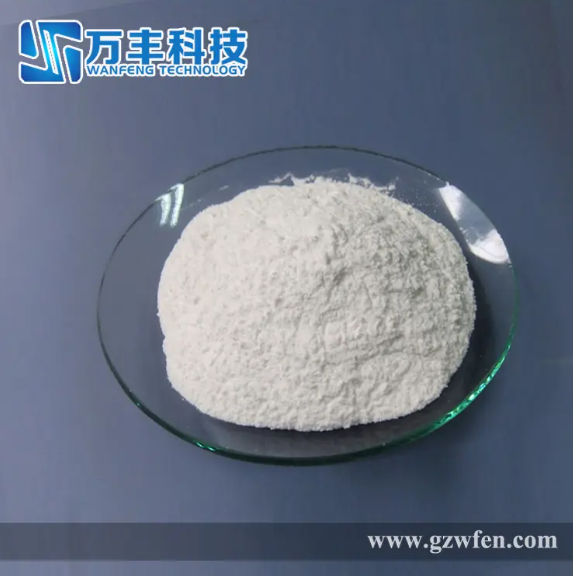
Research and development teams must evaluate technical datasheets meticulously. Procurement departments also need clear dimensions to compare vendor offerings. You cannot rely on generic specifications when producing high-performance components. We will outline the specific metrics you must scrutinize to ensure production viability.
Suppliers categorize purity using the "N" system, where 3N means 99.9% and 5N means 99.999%. You must differentiate between academic purity and commercial viability. Over-specifying material purity wastes budget, while under-specifying causes catastrophic product failures.
A 3N grade often suffices for basic metallurgical flux applications. In these environments, minor impurities do not drastically alter the final alloy mechanics. However, optical applications demand much stricter controls. If you manufacture ZBLAN glass or laser crystals, 5N purity is strictly non-negotiable. Even a fraction of a percent of contamination will disrupt the crystal lattice.
Below is a quick reference table detailing standard purity grades and their appropriate industrial applications.
Purity Grade | Percentage | Primary Industrial Application | Tolerance for Contamination |
|---|---|---|---|
3N | 99.9% | Metallurgical Fluxes, Basic Ceramics | Moderate (Will not ruin basic mechanical traits) |
4N | 99.99% | Standard Anti-Reflective Coatings | Low (Requires careful handling of moisture) |
5N | 99.999% | Fiber Optics, Scintillator Crystals | Zero (Trace metals cause immediate failure) |
Total purity numbers can sometimes mislead buyers. You must examine the specific trace elements present in the remaining 0.1% or 0.01%. Transition metals like iron (Fe), copper (Cu), and nickel (Ni) exert an outsized negative impact on optical systems. They create strong absorption bands in the infrared spectrum.
Oxygen and moisture content represent another severe threat. When heated, trapped moisture reacts to form oxyfluorides. These molecules cause severe light scattering. You must demand a Certificate of Analysis (CoA) detailing these specific trace elements.
The chart below outlines maximum allowable trace limits for optical-grade materials.
Trace Element | Maximum Limit (Optical Grade) | Negative Impact on Final Product |
|---|---|---|
Iron (Fe) | < 2 ppm | Creates severe IR absorption bands; reduces transmission. |
Copper (Cu) | < 1 ppm | Causes color centers and optical signal attenuation. |
Nickel (Ni) | < 2 ppm | Induces thermal stress and micro-cracking in crystals. |
Oxygen (O2) | < 50 ppm | Forms oxyfluorides; causes light scattering and opacity. |
Chemical purity only solves half the equation. Physical morphology dictates how the material behaves on your production line. Tight Particle Size Distribution (PSD) is critical. It determines how evenly the powder melts or disperses.
If you use Lanthanum Fluoride Powder for vapor deposition coatings, inconsistent particle sizes cause erratic evaporation rates. This leads to uneven coating thickness. In glass melting, larger particles take longer to dissolve, leaving unmelted inclusions in the final pane. Specify D50 and D90 parameters clearly with your supplier to ensure melting efficiency and coating uniformity.
Adopting these advanced materials at scale introduces significant operational realities. You must address safety, environmental impact, and material handling protocols. Ignoring these risks leads to degraded materials and regulatory complications.
The chemical manufacturing industry faces a massive shift toward sustainable practices. Historically, synthesizing these fluorides required vast amounts of hydrofluoric (HF) acid. This acid is highly toxic and dangerous to manage. Regulators now strictly monitor its use, disposal, and environmental footprint.
Forward-thinking suppliers are actively developing non-toxic, HF-free synthesis methods. This shift directly impacts your long-term corporate ESG reporting. Partnering with suppliers who use legacy toxic methods introduces severe supply chain vulnerability. Regulatory shutdowns could halt your raw material flow overnight. You must query your vendors about their synthesis routes. Choose partners aligned with modern environmental standards to protect your production continuity.
Many specialized fluorides exhibit strong hygroscopic behavior. They actively absorb moisture from the surrounding ambient air. This characteristic introduces severe handling risks on the factory floor.
If a powder absorbs water, high-temperature processing will trigger a catastrophic chemical reaction. The water reacts with the fluoride to form hydrogen fluoride gas and rare earth oxyfluorides. As mentioned earlier, oxyfluoride contamination ruins optical clarity. It creates cloudy, unusable glass or heavily fractured crystals. You cannot reverse this chemical change once it occurs in the melt. Prevention remains the only viable strategy.
Because of moisture sensitivity, you must implement strict environmental controls. You cannot store these powders on standard warehouse shelves. Both R&D labs and production floors require dedicated infrastructure to maintain material integrity.
Vacuum Sealing: Keep materials in original, vacuum-sealed Mylar bags until the exact moment of use.
Glove Boxes: Perform all weighing and mixing inside argon-purged or nitrogen-purged glove boxes.
Climate Control: Maintain facility relative humidity below 30% in areas where bags are opened.
Baking Procedures: Implement a low-temperature vacuum baking step immediately prior to melting. This drives off any superficial surface moisture.
Transitioning from a successful R&D pilot to full-scale production requires a robust procurement strategy. You need a reliable decision framework to shortlist vendors. Evaluating suppliers purely on initial quotes often leads to downstream manufacturing disasters. You must prioritize vendors who guarantee long-term material stability.
A structured vetting process eliminates unreliable vendors early. Use the following checklist to evaluate potential supply partners. If a vendor fails any of these three pillars, they pose a severe risk to your production line.
Traceability and Documentation: Do they provide comprehensive Certificates of Analysis (CoA)? A generic CoA is useless. You need batch-specific impurity profiles. The document must explicitly list transition metal parts-per-million (ppm) and moisture content. If a supplier refuses to test for specific trace elements, disqualify them immediately.
Scalability and Consistency: Can they maintain specified particle sizes across different volumes? Producing a perfect 1kg pilot batch in a lab differs vastly from delivering a 1,000kg production run. The supplier must demonstrate their capacity to control morphology and PSD at industrial scales. Ask for historical data showing batch-to-batch variance over a six-month period.
Customization Capabilities: Can they adjust the fluorination degree to suit your proprietary manufacturing setups? Off-the-shelf powders do not always fit custom melting profiles. Top-tier suppliers offer custom milling, doping, and synthesis adjustments. You might need a slightly different surface area to optimize your specific coating chamber. Ensure your partner possesses the technical agility to modify their process for you.
Specifying high-purity Rare Earth Fluorides represents a strategic alignment of material science and manufacturing efficiency. These compounds dictate the optical clarity, mechanical strength, and radiation resistance of your final products. You must prioritize strict trace element control and precise particle size distribution to maintain high production yields.
Your next step involves auditing your current yield losses. Trace defects back to their material origins. Compare your existing supplier CoAs against the strict tolerances required by your engineering team. If you identify gaps in purity or consistency, you must act quickly.
We encourage you to request custom sample batches for comprehensive validation testing. Reach out to a technical specialist today to discuss your specific operational parameters. By upgrading your material inputs, you secure a more reliable, efficient, and high-performing manufacturing process.
A: Rare earth fluorides possess significantly lower melting points than their oxide counterparts. They provide lower phonon energies and specific refractive indices crucial for infrared optics. Fluorides allow for broader transmission windows, whereas oxides tend to absorb infrared light, limiting their use in advanced laser and sensor applications.
A: Moisture causes severe degradation during high-temperature processing. The trapped water reacts with the powder to form oxyfluorides. These oxyfluorides act as scattering centers, completely ruining optical clarity in glasses and crystals. Strict vacuum storage and dry-box handling are necessary to prevent this irreversible conversion.
A: Yes. Top-tier material suppliers offer specialized milling and synthesis adjustments. They can precisely control the Particle Size Distribution (PSD) to meet your exact requirements. Customizing the D50 and D90 metrics ensures optimal dispersion for coatings and uniform melting rates for glass manufacturing.
A: The industry is actively shifting toward sustainable practices. Ongoing R&D focuses on HF-free processing, eliminating the reliance on highly toxic hydrofluoric acid. When vetting suppliers, you should query them about their synthesis methods to ensure alignment with modern ESG compliance and environmental sustainability goals.


