
close
Choose Your Site
Global
Social Media


Views: 0 Author: Site Editor Publish Time: 2026-07-06 Origin: Site


In advanced photonics and high-energy physics, component failure rarely happens at the macro level. Instead, it originates in trace impurities at the precursor stage. Every atomic defect compounds as you scale your manufacturing operations. Transitioning from lab-scale formulation to commercial manufacturing of scintillators or specialty glass requires rigid baselines. You must secure precursors capable of maintaining strict low-oxygen and low-moisture profiles. Even minor deviations can ruin transmission rates and render a batch useless.
This guide establishes the essential engineering criteria for specifying and sourcing materials like Rare Earth Fluorides. You will discover how to ensure high optical yield and predictable refractive indices. We also outline practical ways to achieve robust radiation detection performance without hitting scaling bottlenecks. By understanding these foundational principles, your engineering team can avoid costly production failures and streamline advanced material sourcing.
Optical superiority: Rare earth fluorides (due to low phonon energy) provide exceptionally broad transmission windows from the vacuum ultraviolet (VUV) to the mid-infrared (MIR) regions.
Critical evaluation metrics: Procurement viability hinges on absolute purity (often ≥99.99%), total rare earth oxide (TREO) minimums, and strict control of residual oxygen/moisture to prevent OH- absorption bands.
High-leverage applications: Core use cases include heavy-metal fluoride glasses (like ZBLAN), radiation-hardened scintillators, and anti-reflective optical coatings (leveraging Lanthanum Fluoride).
Scaling realities: Successful commercial rollout requires suppliers capable of providing rigorous batch-to-batch consistency and verifiable Certificates of Analysis (COAs) for transition metal impurities.
Optical engineers constantly balance material durability against spectral performance. Oxide matrices, such as standard silica, offer exceptional thermal and mechanical robustness. You use them when structural integrity is the primary goal. However, oxides possess inherently high phonon energies. They vibrate at frequencies causing non-radiative relaxation in excited ions. You lose valuable photons to heat. Fluorides solve this exact problem. They become mandatory when low non-radiative relaxation rates are non-negotiable. They grant you a significantly wider spectral transmittance window.
The core advantage lies in low phonon energy. Rare earth elements contain specific transition levels necessary for photon emission. High phonon energy environments quench these sensitive transitions. Fluoride matrices minimize these phonon-assisted energy losses. They form the critical structural backbone for advanced upconversion phosphors. You also need them to manufacture ultra-low-loss mid-IR fiber optics. Without a low phonon host matrix, these applications simply cannot function.
We must maintain baseline assumption transparency. Fluorides offer superior optical properties. However, they introduce significant manufacturing complexities. Many exhibit highly hygroscopic behavior. They eagerly absorb moisture from the surrounding air. This characteristic demands stringent supply-chain oversight and specialized handling protocols. You cannot treat them like stable, forgiving oxides. Success requires adapting your entire production line to accommodate their sensitivity.
Modern high-energy physics and medical imaging demand rigorous performance from detection materials. Scintillators require high stopping power to capture gamma rays efficiently. High physical density is crucial for this task. Fast decay times prevent signal pile-up during rapid detection events. Radiation hardness ensures long-term longevity in harsh environments. Cerium Fluoride (CeF3) and Lutetium-based fluorides serve as prime candidates. Engineers deploy them extensively in high-energy physics calorimeters. Medical imaging systems, particularly PET scanners, rely heavily on their fast optical responses.
When evaluating these precursors, you must focus heavily on light yield consistency. Purity is paramount. Trace transition metals act as aggressive quenching centers. Elements like iron or nickel absorb the emitted light before it reaches the photodetector. You must demand absolute absence of these trace elements to maintain detector sensitivity.
Precision optics require exact refractive index control. You also want minimal optical absorption across the intended spectrum. Lanthanum Fluoride integration stands out in this domain. It serves as a critical high-index material. You integrate it into complex multilayer VUV and UV anti-reflective coatings. It also performs exceptionally well in highly reflective optical stacks for laser systems.
Your evaluation process here must center on coating compatibility. Consider how the material behaves during physical vapor deposition (PVD) or ion-beam sputtering (IBS). Does it sublime evenly? Film density characteristics ultimately dictate the mechanical durability and optical performance of the finished lens. Porous films absorb water, which degrades spectral performance over time.
Next-generation fiber optics rely on heavy-metal fluoride glasses, particularly ZBLAN, and hybrid fluorophosphate systems. These materials deliver broad transmission from the UV down into the Mid-IR spectrum. They possess a unique capacity to host rare-earth dopants, such as Er3+ or Pr3+, in high concentrations. Crucially, they do this without clustering. Dopant clustering causes cross-relaxation, which destroys laser amplification efficiency.
Your primary evaluation focus must be crystallization resistance. During the delicate fiber-drawing process, the glass approaches its softening point. Any impurities in the rare earth precursors will act as nucleation sites. Crystals will form inside the glass matrix. These micro-crystals scatter light and shatter transmission capabilities. Purity dictates whether you successfully draw a kilometer of pristine fiber or end up with brittle, opaque shards.
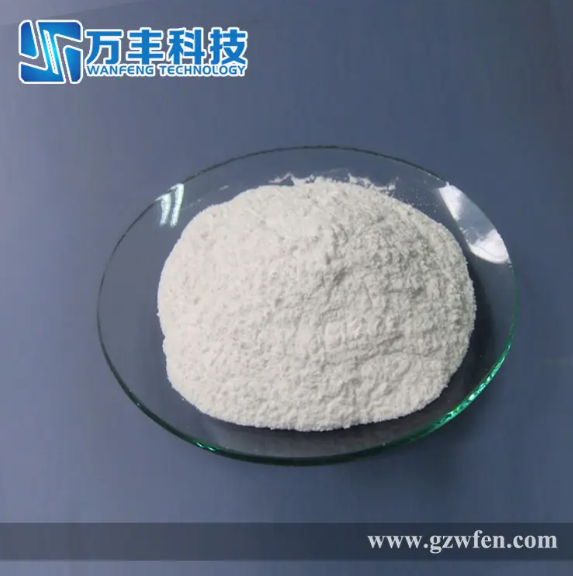
Engineers often misunderstand absolute versus relative purity. A supplier might advertise standard "99.9%" purity. This sounds adequate, but it is often insufficient. You must ask what constitutes the remaining 0.1%. If that tiny fraction contains optically active contaminants, your yield drops to zero. Iron, copper, or rogue neodymium in a non-neodymium system will ruin transmission. You must specify absolute purity metrics targeting the exact dopants you need to exclude.
Moisture and oxygen control are equally critical. OH- and O2- ions cause catastrophic damage when they enter the crystal lattice. They create massive optical absorption bands, specifically around 2.7 to 3.0 µm. This spectral region is exactly where many advanced mid-IR lasers operate. You must identify vacuum-drying or reactive atmosphere processing as required supplier capabilities. If a supplier cannot prove they utilize these methods, they cannot meet optical-grade standards.
Particle morphology and distribution also require careful scrutiny. Particle size directly impacts melting kinetics. Surface area affects reaction rates during glass melting or crystal growth. Large, irregular chunks melt too slowly, leaving unmelted inclusions. Excessively fine powders may agglomerate. They can trap unwanted gases in the melt, causing bubbles. You need a consistent, engineered particle size distribution.
Use the following sourcing checklist to establish rigid boundaries with your suppliers. Demand these specifications upfront.
Parameter | Required Threshold | Impact on Manufacturing Yield |
|---|---|---|
Total Rare Earth Oxide (TREO) | Strict minimums (often < 0.1%) | Prevents phonon energy spikes and matrix destabilization. |
Transition Metal Limits (Fe, Cu, Ni) | < 5 to 10 ppm | Eliminates optical quenching and maintains light yield. |
Moisture Content (H2O) | < 100 ppm (application dependent) | Prevents fatal OH- absorption bands in the Mid-IR range. |
Specific Surface Area (BET) | Customized to process (e.g., 1-5 m²/g) | Ensures predictable melting kinetics and prevents gas entrapment. |
You cannot ignore the hygroscopic threat. Many of these advanced precursors absorb atmospheric moisture rapidly. If improperly stored, they pull water straight from the air. When you heat hydrated materials, the water reacts. It forms highly corrosive hydrogen fluoride (HF) gas and leaves behind rare earth oxides. This oxygen contamination permanently alters your matrix.
You must establish strict storage and handling protocols. We highly recommend utilizing inert atmosphere gloveboxes for all material handling. Maintain oxygen and moisture levels well below 1 ppm. Implement vacuum sealing for all inventory management. You must prevent hydration entirely before the materials ever reach the melting stage.
Crucible and equipment compatibility present another major hurdle. Molten fluorides are aggressively corrosive. They will rapidly eat through standard silica or alumina crucibles. This reaction ruins the crucible and injects massive amounts of secondary contamination into your batch. We recommend utilizing compatible materials. Platinum is the industry standard for high-purity melts. Glassy carbon also provides an excellent, non-reactive alternative in specific atmosphere conditions.
Finally, understand the thermal processing realities. You cannot simply melt these materials in ambient air. The process necessitates specialized fluorinating atmospheres. Engineers typically introduce HF or SF6 gases during the melting cycle. This atmosphere compensates for any minor fluorine volatilization that naturally occurs at high temperatures. It actively suppresses rogue oxide formation, ensuring your matrix remains chemically intact.
Scaling up introduces severe vulnerabilities. The pilot-to-production variance represents a common industry pitfall. Lab-grade, 100-gram samples often perform flawlessly. The R&D team approves the formulation. However, ton-scale commercial batches fail spectacularly. Process variations and bulk contamination issues scale non-linearly. A supplier might manually purify small batches but lack the infrastructure to maintain that purity continuously in large reactors.
You must implement strict vendor auditing criteria before committing to commercial volumes. Use the following numbered framework to evaluate potential partners:
Assess their raw material pipeline: Do they chemically process raw ores, or do they simply repackage bulk industrial materials? True optical-grade suppliers control the extraction and purification chemistry.
Verify customization capabilities: Can they customize particle size distributions? Can they precisely tune specific dopant ratios to match your proprietary formulations?
Demand analytical transparency: Do they provide lot-specific ICP-MS or ICP-OES testing? Never accept generic, templated specification sheets.
Your next steps for procurement must be highly calculated. Guide your purchasing teams to request comprehensive documentation. Demand trace metal analysis reports right alongside the standard COAs. Never scale directly to full production. Start with controlled pilot batches. Validate the optical properties of the final product from these pilot runs before authorizing ton-scale agreements.
High-performance optics and advanced scintillators are fundamentally constrained by the chemical integrity of their precursors. You cannot engineer around bad starting materials. Specifying appropriate compounds requires looking far past surface-level purity claims. You must aggressively interrogate residual oxygen content, strict moisture control, and comprehensive trace metal profiles. Every skipped verification step introduces risk into your final product yield.
Take action to secure your supply chain immediately. Prompt your engineering and procurement teams to request a deep-dive technical consultation with prospective suppliers. Download detailed material specification sheets to align your internal R&D baselines. Order analytical-grade samples for formulation testing today, and ensure your commercial rollout rests on a foundation of uncompromised material science.
A: It provides superior specific refractive index properties and a much broader transmission range. It remains highly transparent from the deep ultraviolet all the way to the infrared spectrum. Crucially, it lacks the oxygen bonds present in oxides. Those oxygen bonds absorb specific UV and IR wavelengths, limiting optical performance in advanced multi-layer coatings.
A: Moisture introduces water into the matrix, leading to the formation of hydroxyl (OH-) groups during melting. These groups cause severe optical attenuation. They create massive absorption bands in the mid-infrared region. This attenuation is particularly fatal in fiber optics and laser glass applications, destroying signal integrity.
A: You must look for strict, quantifiable limits on transition metals like iron, copper, and nickel. These should typically remain below 10 ppm. Additionally, verify limits on competing rare earth elements. These contaminants cause non-radiative energy transfer, acting as quenching centers that severely reduce the light yield of the scintillator.
A: Yes. Because they are highly hygroscopic, they absorb atmospheric moisture quickly. You must use vacuum packaging for shipping and storage. Once opened, store them in highly regulated desiccators or specialized argon/nitrogen gloveboxes. This prevents hydration prior to thermal processing, protecting your final optical yields.


