
close
Choose Your Site
Global
Social Media


Views: 0 Author: Site Editor Publish Time: 2026-05-12 Origin: Site


Selecting the wrong polishing compound can quickly turn a profitable manufacturing run into a costly disaster. A single pass using the wrong grade of abrasive might leave catastrophic surface scratches across delicate glass or precision optics. Substrate damage forces operators to restart entire processes.
Wasted labor and scrapped materials heavily impact your bottom line. Engineers and industrial buyers must understand the critical differences between regular and polishing grades. You cannot afford to choose consumables based purely on upfront costs. The risk of surface contamination requires a strategic purchasing approach.
This guide breaks down the technical differences between these abrasive types. You will discover a clear framework for balancing surface finish requirements against material costs. We explore specific industry applications, best practices, and crucial process controls. Read on to master process controls and secure flawless polishing results every time.
Purity & Particle Size: Polishing grade delivers >99% purity with tightly controlled, sub-micron particle distribution; regular grade ranges from 60–95% purity with broader particle variance.
The "Rogue Particle" Risk: The true cost of lower-grade powder isn't the material price—it's the risk of a single oversized impurity ruining hours of polishing work.
Chemical-Mechanical Advantage: Unlike purely mechanical abrasives, Cerium Oxide provides a dual-action polish, but only when moisture and temperature are strictly managed.
Implementation Trumps Specs: Even premium grades will fail if the slurry dries out during application, highlighting the need for strict process controls.
Differentiating between abrasive grades helps you control quality. Manufacturers engineer Cerium Oxide to meet specific industrial tolerances. These structural differences directly dictate the final surface clarity. You must evaluate purity levels and particle distributions closely.
Polishing grade materials serve highly critical applications. Industry professionals often call this "optical grade" powder. You can easily identify it visually. Pure white color usually indicates highly refined material.
Purity threshold: This grade typically features >99.0% to >99.9% Cerium Oxide (CeO2). Refineries remove nearly all trace elements during processing.
Particle engineering: Manufacturers maintain tightly controlled micron and sub-micron sizes. Most premium batches range between 0.3µm and 1.5µm. Uniformity guarantees consistent friction across the pad.
Performance outcome: Operators achieve zero-tolerance uniformity. The compound is designed to eliminate secondary scratching entirely. It leaves behind an optically transparent, flawless finish.
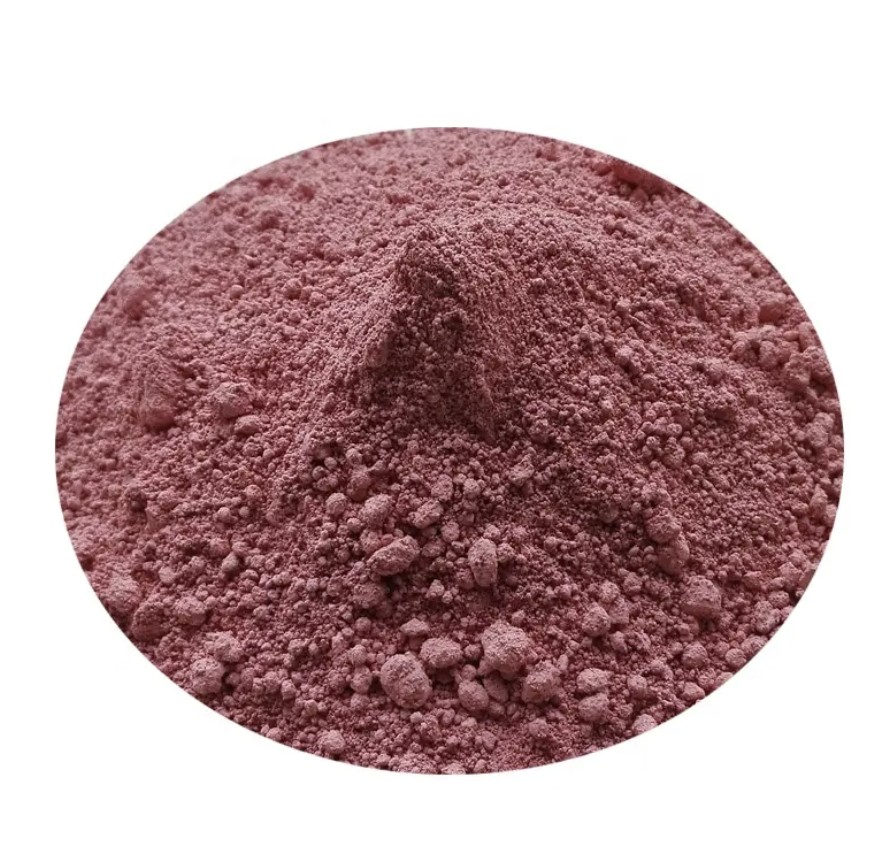
Regular grade powders offer an economical alternative. They work perfectly for aggressive stock removal. However, they lack the extreme refinement required for delicate optics. You will notice a distinct color difference immediately.
Purity threshold: Purity ranges from 60% to 95%. Visually, it presents as beige, pink, or light brown. This coloration stems from harmless but unrefined trace rare-earth elements. Common trace elements include Lanthanum or Praseodymium.
Particle engineering: Standard grades feature a broader size distribution. You will typically find grain sizes from 2µm to 4µm+. Larger particles increase the cutting speed significantly.
Performance outcome: Operators experience faster aggressive stock removal and deep scratch leveling. It performs well during initial shaping phases. However, it leaves a microscopic haze. You may require a secondary fine polish to restore perfect transparency.
Specification | Polishing Grade (Type A) | Regular Grade (Type B) |
|---|---|---|
Purity Level | >99.0% to 99.9% | 60% to 95% |
Particle Size | 0.3µm - 1.5µm | 2.0µm - 4.0µm+ |
Visual Color | Pure White | Beige, Pink, Light Brown |
Primary Function | Flawless optical transparency | Aggressive scratch leveling |
Proper selection depends entirely on your specific substrate. You cannot use a one-size-fits-all approach. Harder substrates might tolerate coarse particles better. Fragile optical materials demand absolute precision. Base your choice on the final application requirements.
Certain industries operate under strict zero-defect policies. Subsurface damage ruins expensive components instantly. These fields mandate the highest purity Cerium Oxide available.
Semiconductor CMP (Chemical-Mechanical Planarization): Silicon wafers demand absolute flatness. Microscopic scratches cause electrical shorts in microchips. Polishing grade powder prevents yield losses.
Advanced Optics: Telescope mirrors and precision camera lenses require perfect light transmission. Any haze degrades the imaging quality. Optical grade ensures maximum clarity.
High-End Lapidary Faceting: Gem cutters work on valuable stones like quartz or beryl. Sub-micron powders provide a mirror-like finish. They maximize the refractive brilliance of the gemstone.
Many commercial projects prioritize speed over microscopic perfection. Standard grades excel in these fast-paced environments. They offer excellent value for bulk material removal.
Automotive Windshield Repair: Wiper scratches require aggressive leveling. Regular grade cuts through hardened auto glass quickly. Minor micro-haze often remains invisible to the naked human eye.
Architectural Glass: Decorative mirrors and glass beveling operations consume large powder volumes. Standard grades handle edge shaping efficiently. The lower cost improves profit margins for bulk manufacturers.
DIY Hobbyist Glass Restoration: Home restoration projects rarely need aerospace tolerances. Standard grade powder fixes scuffed watch faces or antique bottles perfectly. It balances cost and effectiveness well.
Always base your choice on the substrate's fragility. Consider the final optical clarity required. Do not base decisions just on the upfront cost per kilogram. Purchasing cheap powder for delicate lenses costs more eventually. Labor hours spent fixing scratches outweigh material savings. Always align your grade selection directly to your quality control standards.
Buyers often ask why they should avoid cheaper alternatives. Traditional abrasives like aluminum oxide cost less initially. However, they lack a specific chemical advantage. Cerium Oxide dominates the glass finishing industry for a scientific reason.
This rare-earth material provides a unique chemical-mechanical planarization (CMP) effect. Friction heat triggers a chemical reaction between Cerium ions and silicon dioxide. This reaction temporarily softens the microscopic glass flaws. The pad then mechanically sweeps them away. You achieve a smoother surface much faster than pure physical grinding.
Aluminum oxide relies entirely on slow, physical grinding. It acts like microscopic sandpaper. This mechanism makes it highly prone to leaving micro-abrasions. It often leaves a hazy finish on glass surfaces. You spend extra hours trying to buff out this remaining haze.
Diamond stands as the hardest known abrasive. It cuts through materials aggressively. However, diamond is simply too hard for soft glass or delicate crystals. It risks severe substrate deformation. It frequently causes invisible subsurface damage. This internal stress can crack the lens later under pressure.
Silicon carbide performs well for initial rough shaping. Lapidary professionals use it to establish primary facets. However, it remains excessively aggressive. It acts as a heavy cutting agent. It is completely unsuitable for achieving a transparent, optical-grade polish.
Abrasive Type | Primary Mechanism | Drawbacks for Glass | Ideal Use Case |
|---|---|---|---|
Cerium Oxide | Chemical-Mechanical (Dual-Action) | Requires strict moisture control | Final optical polish |
Aluminum Oxide | Purely Mechanical | Leaves micro-abrasions/haze | General metal polishing |
Diamond Paste | Aggressive Physical Cutting | Causes subsurface stress cracks | Sapphire or carbide grinding |
Silicon Carbide | Heavy Physical Grinding | Too rough for transparency | Initial rough shaping |
Evaluating abrasives requires looking beyond the invoice price. Total Cost of Ownership (TCO) encompasses material cost, labor time, and defect rates. Smart buyers evaluate the hidden risks of cheap materials.
In precision optics, TCO is dictated primarily by defect rates. Cheap batches often contain unrefined materials. A single oversized grain acts as a rogue particle. It drags across the substrate under heavy pressure. This gouges a deep trench into an otherwise perfect surface. You are forced into a complete restart of the polishing phase.
The cost of premium polishing powder is negligible. Compare it to the skilled labor hours required to rework a ruined surface. A technician might spend four hours polishing a telescope mirror. If cheap powder scratches it, those four hours are entirely wasted. Investing in high-purity Cerium Oxide acts as an insurance policy. It protects your most expensive asset: human labor.
Purchasing from verified optical-grade suppliers is a safer business decision. You should avoid relying on unverified automotive or hardware store channels. General hardware channels often suffer from cross-contamination. They package cheap compounds in dirty facilities. Verified suppliers utilize cleanrooms. They provide Technical Data Sheets (TDS) verifying exact micron distribution.
Having the best polishing powder guarantees nothing on its own. Implementation trumps specifications every single time. Even premium grades will fail under poor operational conditions. You must establish strict process controls on the shop floor.
You cannot apply dry powder directly to a substrate. Industry standards dictate mixing it to a 10% to 20% weight ratio. Mix the powder slowly into distilled water. Tap water contains minerals capable of scratching glass. You want to achieve the ideal "thin cream" consistency. Too thick, and the pad hydroplanes. Too thin, and you lose chemical-mechanical efficiency.
Machine speed dictates the thermal reaction. Maintain machine RPMs strictly between 100 and 400 RPM. This range provides enough friction to trigger the chemical reaction. However, it remains slow enough to prevent thermal shock to the substrate. Excessive speeds overheat the glass, causing sudden stress fractures.
This is the most common error in commercial polishing. If the slurry is allowed to completely dry on the polishing pad during operation, disaster strikes. Dry powder transforms back into an aggressive cutting agent instantly. It causes instant, irreversible scratches. Continuous moisture is mandatory. Operators must spray the pad lightly using a spray bottle.
Professionals use a specific technique for zero-tolerance projects. They call it decanting. This method provides maximum safety against unexpected rogue particles.
Mix the abrasive powder vigorously into a tall container of distilled water.
Allow the mixture to sit undisturbed for a short period (usually 10 to 15 minutes).
Heavy rogue particles or clumps will naturally sink to the bottom.
Carefully harvest only the milky, suspended top layer into a secondary squeeze bottle.
Use this purified top layer for the final polish.
This technique guarantees absolute safety. You leave all hazardous particles trapped safely at the bottom of the original container.
Choosing the right abrasive grade defines the success of your finishing process. We have explored the deep differences between polishing and regular specifications. You understand how chemical-mechanical planarization outperforms basic grinding. Remember these core takeaways when planning your next project:
Use regular grade for aggressive, large-scale glass leveling.
Mandate polishing grade for optical clarity and sensitive material finishing.
Protect your labor investment by actively avoiding the rogue particle threat.
Implement strict slurry moisture controls to prevent instant thermal scratching.
Do not leave your surface quality to chance. We encourage buyers to request a sample batch before committing to large volumes. Consult a materials engineer to optimize your slurry ratios. Review technical data sheets (TDS) rigorously. Match the exact micron distribution to your specific process parameters to achieve flawless results.
A: For absolute optical perfection, 0.3µm to 0.5µm is the industry standard. This ultra-fine size prevents secondary micro-abrasions. For standard commercial finishing, such as architectural glass or auto repair, 1.0µm to 1.5µm is highly acceptable and works faster.
A: Scratches usually stem from three common errors. First, you might be using regular grade instead of optical grade. Second, the slurry likely dried out on the pad during operation, turning it into a cutting agent. Third, you may have contamination from a dirty polishing pad.
A: Yes, generally. A pure white color indicates highly refined optical grade powder (usually >99% purity). If the powder is pink, beige, or brown, it indicates standard grades. These darker colors stem from harmless trace amounts of other rare-earth minerals left unrefined.


