
close
Choose Your Site
Global
Social Media


Views: 0 Author: Site Editor Publish Time: 2026-08-13 Origin: Site


Purchasing cerium oxide isn't a simple commodity transaction. Mismatched polishing powders lead directly to severe surface defects. These errors cause high rejection rates and highly inefficient processing times. Buyers often struggle to look past the base price per kilogram. They ignore critical variances in chemical purity, particle size distribution, and dynamic slurry behavior. You cannot achieve perfect surfaces if your abrasives fight against your equipment. This guide provides procurement teams and technical buyers an evidence-based evaluation framework. You will learn how to compare cerium oxide polishing powder options effectively. We evaluate technical specifications, precise application matching, and supplier reliability. This approach ensures your manufacturing line runs smoothly. You will reduce rework and secure a reliable supply chain.
Establish measurable outcomes before you finalize any purchase. A successful integration goes far beyond a cheap invoice. You must define what parameters dictate success on the shop floor.
Evaluate how tighter cerium oxide polishing powder specifications reduce surface scratching. Poorly graded powders cause rogue sleeks and orange peel effects. These defects ruin optical clarity. Proper specifications eliminate these issues entirely.
Balance the aggressive cutting speed of the powder against your final surface roughness requirements. We measure this surface finish as Ra or Rz. Manufacturers target specific Baumé scale readings to control this balance. Optimal slurry density prevents over-polishing. It maintains the necessary removal rates for efficient production.
Move beyond upfront costs to assess the true cost-to-yield ratio. Measure the longevity of the slurry itself. Track the measurable reduction of manual rework hours. High-quality powders last longer in suspension. They cut more glass per kilogram. This efficiency lowers operational expenses.
Acknowledge the friction of switching powders. Operators face real implementation risks. They must adjust machine feed rates and polish pad pressures. They might also need to modify slurry concentrations. A new powder requires careful recalibration.
Follow these practical steps when defining your success criteria:
Setting these baselines ensures you compare new samples fairly.
Buyers must analyze the Total Rare Earth Oxide (TREO) content carefully. Commercial grades generally range from 50% to 99%+. You should evaluate these numbers skeptically. Buyers shouldn't overpay for 99.9% purity if standard 60-70% TREO handles flat glass polishing perfectly. High purity does not automatically guarantee a faster cut. Often, mixed rare earth oxides provide better mechanical synergy for bulk glass removal.
Median particle size (D50) dictates the final finish quality. Maximum particle size (D90/D100) dictates the risk of catastrophic scratching. Evaluate micron sizes carefully against your desired tolerances. Typical D50 ranges span from 0.5µm to 3.5µm+. A tight distribution curve means fewer oversized rogue particles. If your D90 limit is too high, you will inevitably scratch lenses.
Consider morphology and hardness during your evaluation. The calcination process impacts the exact shape of the cerium particles. It also determines cutting efficiency over extended polishing cycles. High-temperature calcination creates harder, sharper particles. Lower temperatures yield softer, more friable aggregates. Sharp particles cut faster but degrade differently than softer aggregates.
| Evaluation Dimension | Typical Range | Manufacturing Impact |
|---|---|---|
| TREO Content | 50% - 99%+ | Determines base chemical cutting efficiency and price point. |
| D50 Particle Size | 0.5µm - 3.5µm | Controls consistent surface finish and average removal rate. |
| D90/D100 Limit | Strict maximums | Prevents deep, rogue micro-scratches from oversized grains. |
| Morphology | Spherical or angular | Affects polishing pad wear and long-term slurry longevity. |
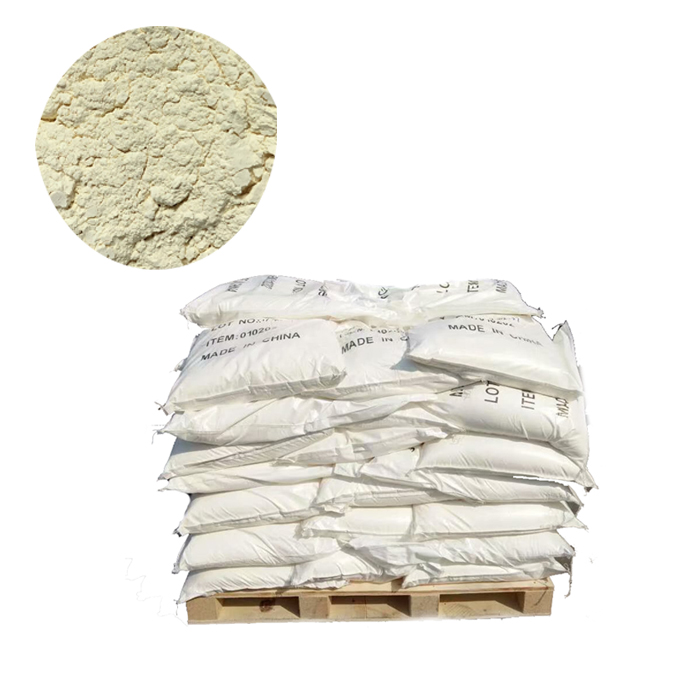
Different manufacturing processes demand highly specialized abrasive behavior. Precision glass cerium oxide polishing powder handles critical requirements for optical lenses, mirrors, and displays. These applications require ultra-tight tolerances. Buyers must demand high-suspension formulations. They also need strict zero-agglomeration guarantees. Any clumping in precision optics ruins the component entirely. You need a powder engineered specifically for low-defect environments.
Flat glass and architectural glass rely on bulk powders. These formulations are optimized for edge beveling. High-volume automated lines depend on them daily. Prioritize slurry longevity and consistent cutting rates here. Ultra-high purity is less important than volume efficiency. Operators need a powder robust enough to survive continuous mechanical agitation. The abrasive must hold up under heavy pressure from straight-line edgers.
Lapidary, stone, and niche applications use distinct formulations. These compare differently for faceted gemstones, quartz, or granite. Address common user pitfalls immediately. Using a high-speed glass powder on softer lapidary stones often leads to severe surface burning. The friction generates too much localized heat. Lapidary requires a powder formulation suited to the specific Mohs hardness of the stone. You must match the abrasive aggressiveness to the substrate material.
Slurry behavior dictates actual shop floor success. Evaluate how long the powder stays in suspension. It should resist settling without constant mechanical agitation. Consider the operational reality of settling. Hard-packing at the bottom of the tank causes inconsistent delivery. It clogs expensive feed lines and ruins production schedules. Operators waste hours digging out solidified cerium from tanks.
Agglomeration risks destroy yield rates. Cheap powders clump during shipping or mixing. They require excessive milling on-site before operators can use them. High-quality powders disperse easily in water.
Factor in pad compatibility. Synergy between the polishing powder and the carrier is vital. Polyurethane pads, pitch, or felt carriers behave differently. A powder optimized for felt might glaze over a polyurethane pad. You must test the abrasive against your specific pad material.
Post-polish washing considerations matter greatly. High-quality powders shouldn't bake onto the glass. They must not resist standard ultrasonic cleaning protocols.
Here are common slurry failures to watch out for:
Batch-to-batch consistency represents the true test of any vendor. A good initial sample doesn't guarantee long-term success. Request Certificates of Analysis (CoA) strictly. Verify consistency over multiple continuous shipments. Check the D50 and D90 metrics on every incoming batch.
Evaluate the supplier's customization capabilities. You might need custom cerium oxide polishing powder for proprietary lines. They should adjust suspension agents, pH modifiers, or particle distributions. A supplier who only sells off-the-shelf catalog items cannot adapt to unique manufacturing challenges.
Traceability and compliance protect your business. Ensure the cerium oxide polishing powder supplier adheres to strict environmental regulations. They must comply with REACH and RoHS standards. They must follow ethical mining practices. Sustainable sourcing prevents sudden supply chain disruptions.
Use a logical shortlisting framework for transitioning suppliers. Follow a strict sequence to mitigate risks. Start with small lab samples to verify basic properties. Move to pilot line testing carefully. Establish strict Service Level Agreements (SLA) on delivery times. Set firm quality thresholds for every shipment. Do not transition your entire factory without running a controlled, multi-day pilot test.
Choosing the right abrasive requires careful alignment. You must align TREO, D50, and slurry behavior with operational realities. Your production line dictates the specific needs. Avoid buying on price alone.
Procurement teams should audit their current defect rates immediately. Calculate the true cost of rework and rejected parts. Request a matched technical sample alongside a CoA. Do not rely solely on a basic price sheet. Test the material rigorously in a controlled pilot run. Monitor the Baumé scale closely during trials. Verify how easily operators can clean the finished glass. Taking these steps guarantees a secure, high-yield manufacturing process. You will stabilize production and empower your operators.
A: The ratio varies based on your application and target Baumé readings. Fine optics often require a milky consistency at a lower Baumé. Spot scratch repair uses a thicker paste. Always measure specific gravity with a hydrometer rather than guessing visual consistency.
A: Micro-scratches typically stem from contamination or poor D90 particle control. Agglomeration issues also cause clumps that drag across the surface. Filter your slurry regularly and check your supplier's particle size distribution guarantees.
A: The base cerium oxide powder is chemically stable. However, suspension additives may degrade over time. Improperly stored powder absorbs moisture, leading to clumping. Always store sealed bags in a climate-controlled environment to maximize shelf life.
A: We strongly advise against this. Lower grades contain impurities and wider particle distributions. You will see an immediate spike in rejection rates. The resulting rework costs completely offset any raw material savings.


