
close
Choose Your Site
Global
Social Media


Views: 0 Author: Site Editor Publish Time: 2026-07-30 Origin: Site


Sourcing the right polishing compounds demands exact chemistry. You must match physical properties to specific operational outcomes. High-precision optics require vastly different materials than heavy-duty auto detailing. When you choose poorly, you face severe consequences on the production line. You might experience inconsistent batch results and microscopic scratching on expensive substrates. Hard caking inside your polishing equipment wastes valuable labor hours and damages machinery. This article provides an evidence-based framework for evaluating critical cerium oxide specifications. We will show you exactly what to look for when reviewing a Certificate of Analysis (COA). You will learn how to select the precise grade needed for your unique application. By understanding these technical parameters, you can secure reliable materials and streamline your entire manufacturing process.
Buyers often confuse regular-grade rare earth powders and polishing-grade materials. Regular-grade powders serve primarily as chemical precursors or catalysts. Manufacturers do not engineer them for abrasive tasks. Polishing-grade materials undergo highly controlled calcination and milling processes. These manufacturing steps create specific particle shapes. The refined morphology ensures the powder performs effectively during friction-based applications.
You must understand the physical limits of these materials. Even the highest-grade cerium oxide functions through chemical-mechanical polishing (CMP). This process relies on a dual-action mechanism. A chemical reaction softens the microscopic surface lattice of the glass. Simultaneously, the mechanical friction of the particles sweeps away the softened material. This process yields an optically clear finish. However, CMP cannot remove deep physical defects. If your fingernail catches in a glass scratch, powder alone will not fix it. You need aggressive abrasive sanding before applying the final polish.
Procurement teams must look beyond the initial invoice. Upfront material costs only represent a fraction of the total operational expense. Cheaper, poorly graded powders often cut slower. This inefficiency increases processing times and wastes expensive labor. Low-quality powders also elevate product reject rates due to unpredictable scratching. Conversely, premium grades extend slurry longevity. They reduce maintenance downtime and deliver reliable, repeatable finishes. Connecting material specifications directly to production efficiency yields the best purchasing decisions.
Evaluating particle size requires looking past single numbers. Average particle size alone tells an incomplete story. You need a comprehensive view of the entire distribution bell curve.
Industry standards rely on D50 and D90 metrics to define powder sizes. The D50 value represents the median particle size. Exactly half of the particles are larger than this number, and half are smaller. It dictates your baseline cut rate and expected surface finish. The D90 value indicates the upper limit constraint. It means ninety percent of the particles fall below this size threshold. Evaluating D50 alongside D90 ensures you receive a tight, predictable distribution. A tight distribution guarantees a uniform, scratch-free finish across the entire substrate.
Different industries require specific particle sizes for optimal results. You must tailor your selection to your precise target material.
The table below summarizes how particle sizes map to specific industrial applications.
| D50 Micron Range | Primary Application | Cut Rate Expectation | Surface Finish Quality |
|---|---|---|---|
| 0.5 - 1.5 µm | Precision Optics, Lenses | Slow / Delicate | Flawless / Angstrom-level |
| 2.0 - 3.5 µm | Flat Glass, Automotive | Moderate / Balanced | Excellent / Optically Clear |
| 4.0 - 5.0+ µm | Beveling, Edge Profiling | Fast / Aggressive | Good / Preparatory |
Uncontrolled particle size distributions pose a massive manufacturing risk. We call oversized contaminants "rogue particles." If a manufacturer claims a 1.5-micron D50 but allows an uncontrolled D100, disaster strikes. A single 15-micron particle hiding in a fine batch will cause unpredictable gouging. Rogue particles ruin expensive substrates instantly. You must demand precise upper-limit controls on every COA.
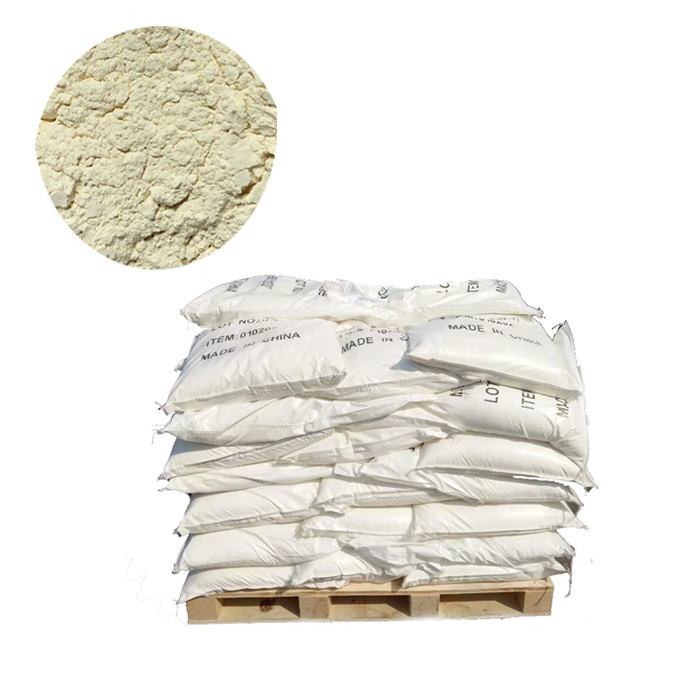
Buyers often fixate on purity percentages without understanding the underlying chemistry. True polishing performance depends on a delicate balance of rare earth elements and the strict exclusion of specific trace minerals.
The TREO metric defines the concentration of active rare earth elements within the powder. A high TREO percentage indicates a minimal presence of useless filler materials. It guarantees you are buying active polishing agents rather than inert dust. However, TREO alone does not specify which rare earth elements make up the blend.
Many buyers mistakenly believe they need 99.9% pure cerium for every job. This is a costly misconception. High-purity grades carry premium price tags suitable only for specialized semiconductor or advanced optical work. For standard glass manufacturing, blended powders perform exceptionally well.
High-quality proprietary blends often contain Lanthanum and Praseodymium alongside cerium. These sibling elements act as synergistic agents. They alter the chemical-mechanical reaction slightly, often improving the suspension properties. These proprietary blends deliver brilliant results at a much lower price point. You should evaluate performance based on your specific substrate rather than chasing an arbitrary purity number.
Your procurement team must heavily scrutinize the COA for trace abrasive minerals. The hardness of these impurities dictates polishing safety. We categorize impurities based on the Mohs hardness scale.
Always reject batches containing hard trace abrasives, regardless of the overall TREO percentage.
Industrial polishing relies on automated slurry systems. The mechanical behavior of the powder in water is just as critical as its chemical composition. Poor suspension properties destroy equipment and halt production lines.
Untreated powders settle rapidly when mechanical agitation stops. Over a weekend shutdown, these particles drop out of suspension. They compact at the bottom of tanks and inside plumbing lines. This settling creates a dense, concrete-like sludge. We refer to this industry-wide headache as "hard caking." Restarting the system requires manual digging, aggressive chemical flushing, and significant labor hours. Hard caking also burns out expensive circulation pumps.
You face a crucial decision between treated and untreated grades. Untreated powders cost less upfront. However, they demand continuous, high-energy agitation. Treated suspension-grade powders contain specialized chemical additives. These additives modify the surface charge of the particles.
Treated powders remain stable in water much longer. When they eventually settle, they form a loose, soft layer rather than a hard brick. They resuspend easily using minimal mechanical agitation. The ROI of purchasing slightly more expensive treated powders is undeniable. You save money on pump replacements, reduce slurry waste, and eliminate weekend maintenance headaches.
Your slurry specifications must interact flawlessly with your delivery mechanisms. Different polishing pads require different suspension characteristics. Natural wool pads absorb heavy slurries easily but degrade quickly. Synthetic rayon pads demand very consistent liquid viscosity to prevent dry spots. Polyurethane polishing wheels require precisely tuned pH levels to maintain structural integrity. You must match the powder's suspension additives to your chosen pad material to ensure consistent friction.
Finding a reliable cerium oxide supplier requires rigorous vetting. You are not just buying a product; you are securing a critical node in your supply chain.
Testing a single pristine sample tells you nothing about long-term reliability. Any manufacturer can produce one perfect bag. True supplier quality reveals itself over time. You need strategies for verifying lot consistency. Request historical COAs spanning six months of production. Compare the D50 and D90 graphs across different lots. If the median particle size swings wildly from month to month, your surface finishes will suffer. Demand tight manufacturing tolerances.
Modern industrial processes rarely fit standard molds. You might require specialized pH compatibility for a proprietary substrate. You might need altered particle morphology to integrate efficiently with your unique robotic polishing arms. Partnering with a manufacturer capable of producing custom cerium oxide blends gives you a massive competitive advantage. They can adjust suspension treatments and micron distributions specifically for your machinery.
Never accept undocumented raw materials. A trustworthy partner provides total transparency. They must supply current, globally compliant SDS (Safety Data Sheets) for proper handling and disposal. Their COAs must move beyond vague summaries. Demand exact PSD (Particle Size Distribution) graphs. Require detailed trace element breakdowns to confirm the absence of alumina or silica. Robust documentation protects your workers and your final product quality.
Evaluating raw polishing materials requires a disciplined, evidence-based approach. You must prioritize tight particle distribution and suspension stability over arbitrary purity metrics. Remember, a smaller, tightly controlled D50 prevents rogue scratching, while treated powders eliminate catastrophic equipment caking. Proprietary blends often outperform pure cerium at a fraction of the cost.
Your next step is clear. Contact your shortlisted suppliers immediately. Request a detailed, lot-specific COA containing full particle size distribution graphs. Never commit to bulk purchasing based solely on a datasheet. Order a pilot testing sample and run it through your actual slurry systems under real-world conditions. Validating performance on your own production floor ensures you secure the exact specifications required for flawless results.
A: Typically ranges from 2 to 4 ounces of powder per gallon of water for automated slurry systems, or a thick paste (peanut butter consistency) for manual spot polishing, depending on the specific product's absorption rate.
A: The dry powder technically does not degrade over time if kept dry and free of cross-contamination. However, pre-mixed slurries can settle or grow biological contaminants if left stagnant.
A: Yes. Manufacturers can alter particle shape, size, and suspension additives to optimize the chemical-mechanical reaction for specific glass types (e.g., borosilicate vs. soda-lime), directly reducing cycle times.


