
close
Choose Your Site
Global
Social Media


Views: 0 Author: Site Editor Publish Time: 2026-08-20 Origin: Site


Procurement managers and materials engineers face a persistent dilemma when sourcing advanced rare-earth materials. You need reliable inputs for sensitive manufacturing processes. Off-the-shelf options seem highly cost-effective initially. However, standard catalog materials often force you to adjust downstream operations. Manufacturers constantly tweak production lines to accommodate material inconsistencies. This creates hidden inefficiencies and drives up rejection rates.
Conversely, bespoke parameters carry higher baseline costs. They also introduce longer lead times. When does it make sense to upgrade? This article provides an objective, technical framework for your sourcing strategy. We will help you determine when the return on investment justifies custom processing. You will learn to weigh custom advantages against the lower baseline cost of standard materials. Ultimately, we explore how precise chemistry solves costly production challenges and stabilizes your entire manufacturing pipeline.
Relying on standard neodymium oxide powder specifications often masks significant operational risks. A typical certificate of analysis highlights a generic 99.5% to 99.9% purity. Buyers naturally assume this represents sufficient quality for most applications. This assumption forms the "good enough" fallacy. Standard purities hide severe variances in trace rare-earth impurities. Elements like praseodymium or samarium fluctuate wildly between standard batches. These hidden contaminants disrupt your chemical baseline and unpredictably alter downstream material performance.
Particle size inconsistencies present another major hurdle. Standard agglomerated powders rarely deliver uniform distribution. This causes uneven mixing during your formulation phase. Consequently, buyers must perform secondary milling in-house. You end up spending excess energy and labor just to make the raw material usable. This negates the initial cost savings of buying standard catalog items.
Furthermore, commoditized batches carry compliance and traceability risks. Off-the-shelf materials often lack stringent supply chain documentation. International regulations regarding critical minerals continue to evolve rapidly. The US Department of Energy (DOE) and other global bodies demand strict provenance for rare-earth elements. Buying generic batches exposes your company to sudden audit failures. Transparent documentation remains essential for long-term contract stability.
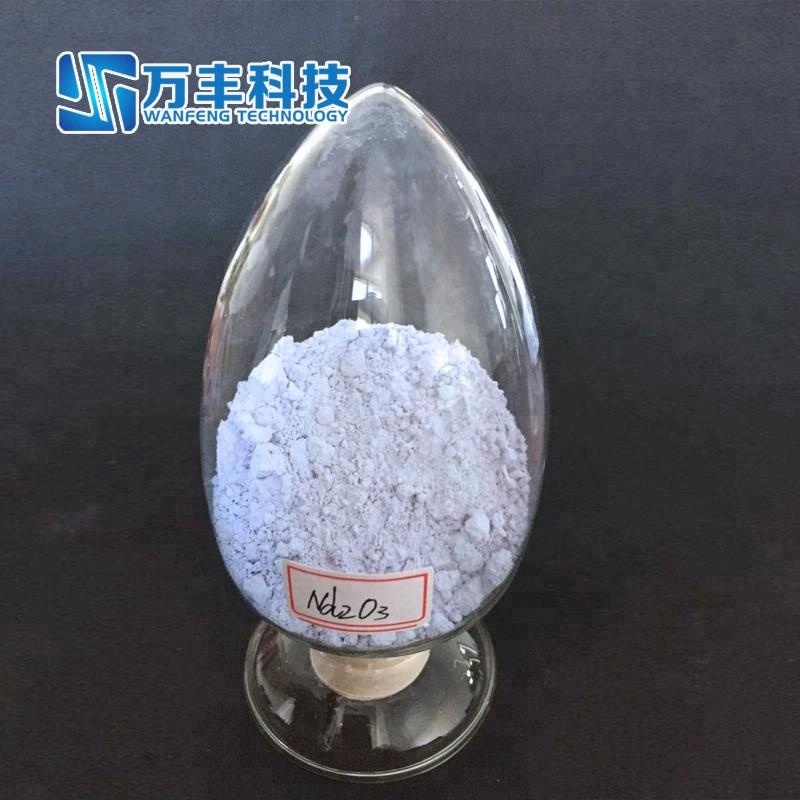
Precision drives the modern magnet industry. High-performance magnet production neodymium oxide powder requires absolute oxygen content control. Standard milling introduces excess oxygen. This creates unwanted oxides during the sintering process. You need uniform particle sizing to maximize the energy product (BHmax) and coercivity in NdFeB magnets. Standard materials simply fail to meet these demanding microstructural needs.
The threshold for customization arrives during scale-up. When scaling EV motor or wind turbine magnet lines, microstructural defects lead to unacceptable failure rates. A slight deviation in particle size causes abnormal grain growth during sintering. Custom powder eliminates this variance, ensuring every motor hits its strict magnetic performance targets.
Advanced ceramics and dichroic glass rely heavily on specific tinting properties. Glaze stability requires a consistent chemical foundation. Standard powders often cause severe color drift under specific firing temperatures. The trace metals present in commoditized batches react unpredictably at high kiln temperatures.
You hit the customization threshold when aesthetic consistency dictates product viability. High-margin architectural glass cannot tolerate unpredictable color banding. Scientific optical lenses require exact refractive indices. Customizing your material ensures predictable thermal behavior and perfectly repeatable visual results across every production run.
Catalyst efficiency depends on surface area. Advanced surface coatings require high specific surface area (BET) metrics. Standard milling techniques cannot achieve these fine specifications without introducing wear-debris contamination. Custom processing utilizes advanced co-precipitation methods. This guarantees the necessary surface area while keeping the chemical profile completely pristine.
Transitioning to custom neodymium oxide powder requires strict financial justification. You must apply a precise yield calculus. Custom material typically carries a 15% to 30% premium over standard catalog options. You need to calculate whether this premium offsets your reduction in defective final units. If a standard batch causes a 5% rejection rate on high-value NdFeB magnets, the financial loss far exceeds the initial raw material savings. Investing in custom specs directly protects your final product margins.
Process elimination provides another major cost offset. Factor in the operational savings of eliminating your in-house pre-processing. Grinding, sieving, and drying consume massive amounts of facility energy. They also tie up expensive labor and require constant equipment maintenance. Buying pre-optimized powder allows your facility to focus entirely on core manufacturing processes.
However, you must acknowledge the counter-argument. Customization does not suit every application. Bespoke specifications carry higher Minimum Order Quantities (MOQs). They require longer lead times for custom milling and validation. Supplier flexibility decreases because they must dedicate specific kiln time to your formulation. If your end product features high tolerances for variance, standard powder remains the optimal financial choice.
| Evaluation Parameter | Standard Catalog Powder | Custom Processed Powder |
|---|---|---|
| Initial Purchase Price | Lowest baseline cost | 15% to 30% premium |
| Purity & Variance | Fluctuating trace elements | Strictly controlled limits |
| In-House Processing | Requires secondary milling/sieving | Ready for direct formulation |
| Lead Time | Off-the-shelf (Immediate) | Extended (Plus 3-6 weeks) |
| Final Assembly Yield | Higher risk of rejection | Maximized consistency |
Generic purity statements offer zero engineering value. You must move beyond simple percentages. Sourcing reliable neodymium oxide powder requires translating your exact production bottlenecks into measurable material limits. Use this engineering checklist to define your custom parameters effectively.
Finding a partner capable of executing custom specifications requires intense vetting. Marketing claims do not guarantee chemical precision. You must audit their physical capabilities and supply chain transparency. Follow these essential steps to qualify a potential partner.
Transitioning to bespoke processing represents a strategic business decision. It roots itself deeply in downstream process efficiency rather than mere raw material procurement. While standard catalogs offer immediate financial appeal, they often trigger cascading failures in high-performance manufacturing environments. Custom material eliminates these hidden operational taxes. It stabilizes your production lines, protects your final product margins, and drastically reduces assembly rejection rates.
Your next action requires an internal assessment. Audit your current yield losses meticulously. Calculate the exact labor and energy spent on secondary processing. If these costs exceed the projected premium of bespoke material, contact a prospective partner immediately. Request a tight-tolerance pilot batch. Run a side-by-side performance comparison against your current standard material. The data will clearly reveal the optimal financial path forward.
A: Custom runs require larger baseline commitments due to equipment setup. MOQs usually start in the hundreds of kilograms. The exact volume depends heavily on the supplier's specific kiln and mill sizes. Small 5kg pilot batches are possible for initial validation, but continuous custom contracts require significant industrial volume.
A: Customization typically adds 3 to 6 weeks to standard delivery schedules. This extended timeframe accommodates bespoke milling, specialized chemical co-precipitation, and rigorous internal testing. Suppliers must validate particle size distributions and impurity limits before shipment. Planning your inventory cycles around these longer lead times remains essential.
A: Generally, no. Standard purities often fail in high-grade magnetics. They typically contain unpredictable levels of trace iron, silicon, or oxygen contamination. Excess oxygen ruins the energy product, while silicon disrupts grain boundaries. High-performance magnets require ultra-precise custom powders to maintain strict coercivity and prevent catastrophic microstructural defects.


