
close
Choose Your Site
Global
Social Media


Views: 0 Author: Site Editor Publish Time: 2026-08-17 Origin: Site


Receiving a substandard batch of rare earth materials presents massive operational risks. You depend on consistent chemical profiles for manufacturing. In high-tech fields like fiber optics and photonics, trace impurities cause catastrophic optical loss. They can also trigger complete structural failure. The pre-shipment inspection window is absolutely critical. Once materials leave the supplier's facility, remediation costs multiply quickly. You must catch errors before freight movement begins. Returning contaminated goods across international borders drains time and capital. Rigorous pre-shipment inspection solves this problem. It relies on verifying chemical assay data, physical morphology, and packaging integrity against agreed-upon baselines. You will learn exactly how to scrutinize purity metrics. We will explore physical property validation and documentation review. This guide empowers procurement teams to enforce strict quality control standards. You can stop bad batches before they ever board a vessel.
You must define purity grades precisely before authorizing any shipment. Buyers often confuse commercial terminology. A 3N grade denotes 99.9% purity. Manufacturers typically use 3N materials for basic ceramic pigmentation. High-tech applications demand much stricter standards. Fiber optic amplifiers and precision lasers require 4N (99.99%) or 5N (99.999%) purity grades. Purity directly dictates the success of your end-use application. Using 3N material in an optical fiber core will cause massive signal attenuation. You must always confirm exact high purity erbium oxide specifications against your internal engineering tolerances.
Total Rare Earth Oxides (TREO) serve as the baseline metric for quality. Buyers must also review individual Rare Earth Oxide (REO) impurities. Suppliers separate erbium from adjacent lanthanides during extraction. Elements like yttrium, neodymium, and holmium often remain as residual impurities. Neodymium poses a severe threat to optical products. It directly interferes with erbium's unique luminescent properties. You should limit competing REO impurities to less than 10 parts per million (ppm) for advanced applications.
Non-REO trace elements destroy product performance faster than anything else. Transition metals like iron (Fe2O3), copper (CuO), and nickel (NiO) absorb specific light wavelengths. Non-metals like silica (SiO2) and calcium oxide (CaO) disrupt crystalline lattice structures. You must demand exact ppm or parts per billion (ppb) counts for these elements. An acceptable high purity erbium oxide batch should restrict transition metals to single-digit ppm levels.
Industry-standard analytical techniques guarantee the validity of these measurements. X-ray fluorescence (XRF) provides insufficient resolution for trace-level detection. You should look for Inductively Coupled Plasma Optical Emission Spectroscopy (ICP-OES) data. Inductively Coupled Plasma Mass Spectrometry (ICP-MS) offers even better sensitivity. Glow Discharge Mass Spectrometry (GDMS) represents the gold standard for solid-state trace analysis. Your testing documentation must explicitly state the exact method used.
Industry Standard Purity Grades and Validation Methods
| Purity Grade | Percentage | Primary Application | Recommended Testing Method |
|---|---|---|---|
| 3N | 99.9% | Ceramics, Glass Pigments | ICP-OES |
| 4N | 99.99% | Laser Crystals, Phosphors | ICP-MS |
| 5N | 99.999% | Optical Fibers, Silicon Doping | GDMS |
Best Practice: Always align your purity requirements with your actual manufacturing needs. Over-specifying purity increases costs unnecessarily, while under-specifying guarantees product failure.
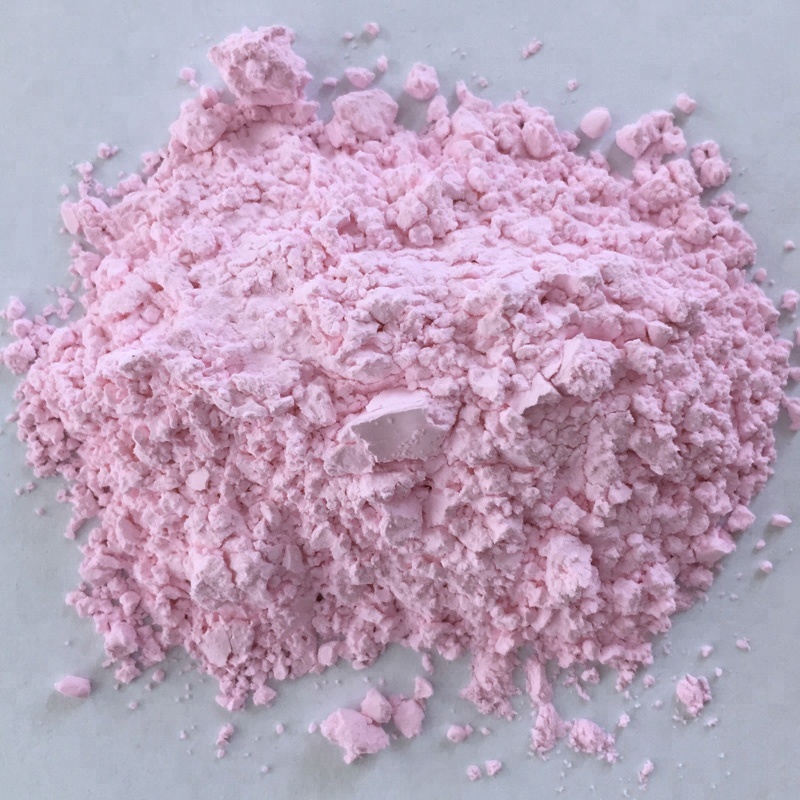
Chemical purity only solves half the equation. Physical property consistency ensures the material behaves predictably during manufacturing. You must review Particle Size Distribution (PSD) data before approving shipment. Inconsistent particle sizes lead to uneven melting rates. They also cause severe doping anomalies during glass manufacturing.
Procurement teams should verify three specific PSD metrics:
Morphology and specific surface area play equally critical roles. We measure surface area using the BET (Brunauer-Emmett-Teller) method. High surface area powders dissolve rapidly. They work perfectly for specific chemical synthesis routes. Conversely, dense, low-surface-area powders perform better in thermal spray coatings. You must ensure the crystalline structure matches your established baseline. Minor phase changes can ruin a batch.
Moisture poses a constant threat. Rare earth oxides act like sponges in humid environments. They absorb moisture aggressively. We measure this vulnerability using Loss on Ignition (LOI) tests. High LOI percentages indicate excessive moisture or trapped carbonates. You must set baseline expectations for LOI. A typical threshold for optical grades is less than 0.5%. High moisture causes violent outgassing during high-temperature processing. Outgassing shatters glass preforms and ruins ceramic casts.
Packaging serves as the final line of defense. It protects pristine materials against moisture ingress. It also prevents catastrophic cross-contamination during transit. A minor tear in a shipping bag introduces ambient humidity. Humidity instantly degrades a perfectly synthesized batch. You must treat packaging protocols as rigorously as chemical specs.
Suppliers must follow standardized packing protocols. A single plastic bag offers inadequate protection. We expect double-layered, anti-static vacuum-sealed bags. The supplier must place these bags inside rigid containment. UN-approved High-Density Polyethylene (HDPE) drums provide excellent impact resistance. Steel drums work well but carry rust risks if damaged. HDPE eliminates this concern entirely.
You should establish a mandatory pre-shipment visual proof policy. Do not authorize freight release blindly. Request multimedia evidence showing the final palletization process.
Require the following visual proof points before shipment:
Common Mistake: Accepting loosely packed drums. Vibration during ocean transit causes loose powders to shift heavily, potentially bursting internal seals. Ensure bags fit snugly inside external drums.
The Certificate of Analysis represents the most important document in your procurement cycle. A reliable COA provides transparent, traceable data. You must break down its anatomy thoroughly. Proper documentation includes the specific batch number. It lists the exact production date and the actual test date. It must identify the specific analytical equipment used. Finally, it requires a verified signature from the lead quality control technician.
Buyers must train themselves to spot red flags instantly. Generic documentation signals a major problem. If a COA lacks a batch-specific identifier, reject the shipment. Watch out for suspicious rounding errors. Analytical equipment rarely outputs perfectly even numbers. The most dangerous red flag involves "typical" values. Suppliers sometimes use historical averages instead of running fresh tests. You need "actual" tested values for your specific lot.
Third-party validation offers the ultimate risk mitigation strategy. Do not release your main financial hold based solely on internal supplier documents. You should request pre-shipment retained samples. The supplier ships a small, sealed sample from the exact same batch. You send this sample to an independent testing laboratory. Independent labs provide unbiased chemical and physical assays. Once the independent data matches the supplier's COA, you can safely authorize the full shipment.
COA Review Matrix
| Data Field | Green Flag (Acceptable) | Red Flag (Reject) |
|---|---|---|
| Trace Impurities | Specific ppm values (e.g., Fe: 1.2 ppm) | Broad ranges (e.g., Fe < 10 ppm) |
| Test Date | Within 14 days of shipment | Months old or entirely missing |
| Testing Equipment | Explicitly named (e.g., Agilent ICP-MS) | Vague terms (e.g., "Lab tested") |
| Values Format | Exact decimals (e.g., 99.998%) | "Typical" or rounded figures (e.g., 99.9%) |
Technical verification relies heavily on the capabilities of your manufacturing partner. Traceability and compliance stand out as primary evaluation criteria. You need a partner holding valid ISO 9001 and ISO 14001 certifications. These frameworks ensure consistent quality management and environmental responsibility. If you ship products into the European Union, REACH compliance becomes mandatory. Ask for raw material origin documentation. Traceable supply chains prevent disruptions caused by geopolitical export restrictions.
Customization capabilities separate premium manufacturers from basic chemical brokers. Off-the-shelf catalog specifications rarely meet advanced engineering needs. You need a partner capable of formulating custom high purity erbium oxide. They must adjust PSD profiles upon request. They should offer specific dopant ratios tailored to your exact manufacturing line. Flexibility during the formulation stage saves immense troubleshooting time later.
Application-specific alignment is crucial for smooth procurement. A supplier focused on agricultural chemicals cannot understand photonics requirements. You need an expert in specialty glass high purity erbium oxide. They already understand why iron and copper limits remain so stringent. They anticipate outgassing issues. A specialized high purity erbium oxide supplier proactively designs quality protocols around your exact industry pain points.
You must outline clear next steps when engaging a new vendor. Start by initiating a small pilot order. Use this pilot order to stress-test their pre-shipment inspection process. Establish a formal Quality Assurance (QA) agreement before signing large contracts. Finally, structure your payment terms intelligently. Tie milestone payments directly to successful pre-shipment inspection results. Withhold final payment until independent lab data clears the batch.
Pre-shipment inspection functions as an active technical review. It is never a passive administrative step. Catching chemical impurities and physical inconsistencies early saves millions in scrapped production. Packaging integrity matters just as much as elemental purity.
Keep these action items in mind for your next procurement cycle:
Aligning with a transparent, technically capable supplier reduces the friction of pre-shipment quality assurance. You should update your internal procurement checklists today. Initiate technical dialogues with specialized manufacturers early in your purchasing process.
A: Optical applications require extremely dry materials. The acceptable moisture threshold generally sits below 0.5% Loss on Ignition (LOI). You test this by subjecting the powder to high temperatures (usually around 1000°C) and measuring the subsequent weight loss. Excess moisture causes violent outgassing and structural defects during high-temperature glass melting.
A: No, you should not rely solely on internal documentation when establishing a new supply chain. We recommend using independent third-party assays for the first 3-5 batches of a new supplier relationship. This strategy mitigates risk and verifies the accuracy of the supplier's internal testing equipment.
A: A standard pre-shipment testing phase typically takes 5 to 10 business days. This window accommodates standard chemical assays (ICP-OES) and physical property checks. If your application requires ultra-trace custom GDMS analysis, testing may take up to 15 business days due to specialized equipment availability.
A: Standard grades provide an off-the-shelf purity baseline (e.g., 4N or 99.99%) with generalized particle sizes. Custom-engineered specs alter physical and chemical traits. A custom order might request a specific particle morphology, tailored surface area, or ultra-low specific transition metal limits designed strictly for specialized laser doping applications.


