
close
Choose Your Site
Global
Social Media


Views: 0 Author: Site Editor Publish Time: 2026-08-24 Origin: Site


Procuring bulk rare earth materials carries incredibly high stakes for modern manufacturing. Trace impurities can easily halt entire production lines. Sudden supply chain disruptions bring similar catastrophic threats. You need a reliable, transparent source to maintain steady operations. This article serves as a practical, commercially focused checklist. Materials engineers and procurement directors will find this framework invaluable.
We purposefully move beyond basic element definitions. Instead, we provide a rigorous framework for evaluating essential material metrics. You will learn how to vet exact physical and chemical specifications. We also explore methods to mitigate geographic supply risks. Furthermore, you will discover how to select reliable production partners. Securing a steady supply requires proactive risk management. By following this guide, you can confidently navigate the complexities of global material procurement.
Procurement blind spots routinely cause disastrous consequences in advanced manufacturing. You cannot afford to treat specialty chemicals like standard commodities. Fractional percentages of non-target elements severely degrade end-product performance. We call this the impurity cascade. For example, trace amounts of transition metals can destroy the magnetic properties of a neodymium alloy. Similarly, minute contamination ruins the optical clarity of specialized glass. Catalytic performance plummets when unwanted elements block active surface sites. These fractional impurities may seem insignificant on paper. However, they create compounding failures across your entire production sequence.
Geopolitical and logistics realities further complicate bulk procurement. Supply chain bottlenecks pose severe business risks. Single-source dependencies often lead to sudden factory shutdowns. Diversified sourcing acts as a non-negotiable success criterion. You must map out secondary and tertiary supply routes. Export restrictions can change overnight. Port congestion can delay shipments for weeks. Buyers who ignore these logistical realities face severe production delays. A resilient strategy demands proactive geographic diversification. You need suppliers operating in varied regions to insulate your operations from localized shocks.
Buyers often fall into the trap of purchasing cheap compounds. Low upfront prices usually signal a false economy. Inconsistent material lots lead to high end-product rejection rates. A single failed batch of finished electronics wastes millions of dollars. You must account for the financial impact of wasted processing energy. Scrapped materials and lost labor hours destroy any initial savings. Your overall production expenses skyrocket when base materials lack consistency. True procurement value lies in absolute chemical reliability. Paying a slight premium for verified consistency always yields better financial outcomes.
Establishing a precise baseline represents the first step in successful procurement. You must navigate Total Rare Earth Oxide (TREO) requirements carefully. Understanding the difference between relative purity and absolute purity remains essential. A specification of 99.9% (3N) relative purity only accounts for the rare earth fraction. It ignores non-rare earth impurities completely. Absolute purity measures all elemental contaminants in the bulk material. A standard rare earth compound might pass relative purity tests but fail absolute purity standards. You must specify absolute purity to avoid unexpected transition metal contamination.
Chemical makeup only tells half the story. Physical characteristics determine how the material behaves during manufacturing. Particle Size Distribution (PSD) strictly dictates mixing and sintering behaviors. The specific surface area (BET) controls catalytic reactivity. Morphology influences packing density and flowability. You cannot ignore these physical traits. Two batches with identical chemistry will perform differently if their PSD varies. Engineers must define upper and lower control limits for all physical parameters. Skipping these physical checks guarantees processing headaches downstream.
Application-specific tolerances require deep technical alignment between buyer and supplier. Standard polishing powders tolerate minor physical variations. High-performance applications demand absolute rigidity. For example, an advanced ceramics rare earth compound like Yttria-stabilized Zirconia requires strictly controlled calcination parameters. Even a five-degree variance during calcination alters the crystal structure. This compromises the mechanical strength of the final ceramic part. You must communicate your exact processing environment to your supplier. They need this context to optimize their synthesis and milling procedures.
Proper documentation protects your commercial interests. You must demand a comprehensive Certificate of Analysis (CoA) for every single batch. The CoA must be tailored to your exact rare earth compound specifications. Never accept generic testing certificates. The document must list actual test results, not typical ranges. It should clearly display both chemical trace analysis and physical property data. Reject any shipment lacking this specific, batch-matched documentation.
Critical Specification Parameters (For Reference)
| Parameter Category | Key Metrics Assessed | Impact on Final Application |
|---|---|---|
| Chemical Purity | TREO, Absolute Purity, Trace Metals | Determines magnetic, optical, and catalytic efficiency. |
| Particle Size | D10, D50, D90 (PSD) | Affects sintering temperature, slurry flow, and packing density. |
| Surface Area | BET (m²/g) | Dictates reactivity rates in chemical and catalytic processes. |
| Morphology | Crystal shape (e.g., spherical, irregular) | Influences mechanical strength in advanced ceramics. |
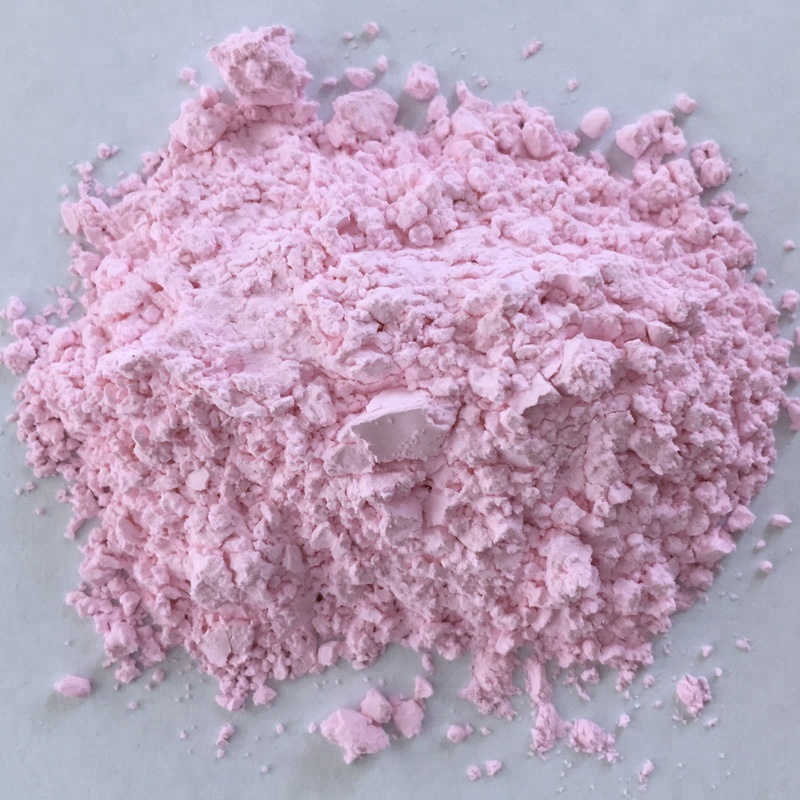
Buyers must decide between standard and custom formulations. Standardized compounds work perfectly for many bulk applications. These include high-availability oxides, chlorides, and carbonates. Standard industry grades suffice for basic glass manufacturing or standard metallurgy. These off-the-shelf solutions offer distinct advantages. They boast shorter lead times and high market availability. Pricing remains relatively transparent and competitive. If your process tolerates typical industrial variance, standard catalogs provide the most efficient procurement route.
However, standard catalogs frequently fail to meet high-tech requirements. Scenarios arise where generic materials simply cannot deliver the required performance. You must evaluate the ROI of commissioning a custom rare earth compound. Custom solutions offer precise co-precipitates designed for exact structural integration. Specialty glass and advanced phosphors often require specific dopant ratios. Achieving these exact atomic ratios requires specialized synthesis. The performance leap in the end product usually justifies the custom engineering costs. You gain a significant competitive edge by controlling the exact material architecture.
Evaluating the feasibility of custom formulations requires careful operational planning. You cannot rush custom chemical synthesis.
By following these steps, you build a realistic timeline for integrating custom materials into your production schedule.
Supplier vetting demands a comprehensive risk-mitigation framework. Traceability and origin verification sit at the core of this process. You must deeply audit your rare earth compound supplier. Ethical sourcing prevents reputational damage to your brand. Supply chain resilience ensures uninterrupted factory operations. Ask suppliers to map their upstream feedstocks. You need to know exactly which mines produce their raw ores. Transparent suppliers willingly provide chain-of-custody documentation. Opaque responses usually indicate unmanaged upstream risks.
Analytical capabilities separate elite partners from average vendors. You must verify their internal testing infrastructure. A reliable supplier uses industry-standard testing for trace impurities. Inductively Coupled Plasma Mass Spectrometry (ICP-MS) represents the gold standard here. Avoid partners relying on outdated legacy methods or basic wet chemistry. Older methods lack the detection limits required for modern high-tech manufacturing. If they cannot detect impurities at the parts-per-billion level, they cannot guarantee high-purity specifications. Demand proof of regular equipment calibration and lab certification.
Quality Management Systems (QMS) require strict scrutiny. Look well beyond a basic ISO 9001 certificate. You need to assess their actual factory-floor practices.
Financial and operational stability secures your long-term supply. You must assess their capacity to hold raw material buffer stock. A financially fragile supplier operates just-in-time, leaving you vulnerable to market shortages. Strong partners absorb sudden macroeconomic shocks. They maintain robust inventories to shield buyers from immediate price spikes. Review their history of meeting Service Level Agreements (SLAs) during market downturns. Financial health directly translates to supply chain reliability.
Moving from a new supplier to full bulk rollout requires a disciplined, phased approach. Phase 1 centers on pilot testing. You must establish strict success criteria before requesting material. Initial lab-scale samples usually range from 500g to 1kg. Your engineering team must test this sample against every critical parameter. Evaluate chemical purity, PSD, and behavioral characteristics during processing. Do not proceed unless the lab sample exceeds all baseline expectations. This phase filters out suppliers who lack basic synthesis competence.
Phase 2 involves the critical scalability test. A perfect 1kg sample means nothing if the supplier cannot produce a metric ton. You must order a pilot-scale batch. This intermediate step validates batch-to-batch consistency. It proves their commercial equipment replicates the lab results. Run this pilot batch through your actual production line. Monitor your internal yield rates closely. Process repeatability at this scale acts as the final technical gatekeeper. Only commit to metric tons after the pilot batch passes all manufacturing stress tests.
Phase 3 focuses on structuring the commercial contract. Technical validation must be paired with commercial protection. Lock in indexed pricing to ensure fair market adjustments. Fixed pricing often fails during volatile commodity cycles. Secure strict lead-time guarantees to protect your production schedule. Most importantly, establish clear penalty clauses for specification deviations. The supplier must bear the financial burden if they ship out-of-spec materials. A well-structured contract aligns the supplier's financial incentives with your quality requirements.
Pilot to Bulk Rollout Chart
| Rollout Phase | Volume Range | Primary Objective | Key Deliverable |
|---|---|---|---|
| Phase 1: Lab Sample | 500g - 1kg | Validate baseline chemistry and physical specs. | Initial Engineering Approval |
| Phase 2: Pilot Batch | 50kg - 200kg | Confirm scalability and process repeatability. | Production Line Validation |
| Phase 3: Bulk Contract | Metric Tons | Secure pricing, lead times, and quality guarantees. | Signed SLA and Master Agreement |
Successful procurement of specialized chemical materials functions entirely as an exercise in risk management. Chemical verification stands as your strongest defense against production failures. You must demand rigorous physical and chemical profiling for every batch. Precision specifications protect your manufacturing yields.
We strongly encourage buyers to prioritize supply transparency over lowest-bidder pricing. Analytical rigor prevents the severe financial penalties of scrapped end-products. Build robust contracts that enforce accountability. Treat your suppliers as strategic operational partners.
Take action today to secure your supply chain. Request a consultation with our technical team to review your specific material requirements. We can help you define precise specifications and provide a verified sample tailored to your application.
A: Acceptable variance depends entirely on the end application. Standard metallurgy might tolerate impurities up to 1%. However, advanced optics and strong magnets often restrict trace transition metals to under 10 parts per million. You must establish strict, application-specific CoAs to define these precise limits.
A: You should utilize independent third-party assay labs for parallel testing. Send random samples from bulk deliveries to an accredited external lab. Compare their ICP-MS results directly against the supplier's provided CoA to verify ongoing analytical honesty.
A: Custom formulations typically require three to six months. Initial lab synthesis and testing take roughly four to eight weeks. Subsequent pilot-scale validation adds another four weeks. Full-scale production scaling and quality assurance complete the timeline before bulk shipping begins.
A: Geopolitical tensions frequently cause sudden export quotas and tariff changes. This creates immediate market volatility and raw material shortages. Buyers mitigate these shocks by using index pricing contracts and requiring suppliers to maintain localized buffer stocks in stable regions.


