
close
Choose Your Site
Global
Social Media


Views: 0 Author: Site Editor Publish Time: 2026-03-27 Origin: Site


Rare earth metals are a group of elements that have become indispensable to modern technology. From smartphones and computers to renewable energy solutions and military applications, rare earth metals play a critical role in the functioning of various high-tech devices. At Ganzhou Wanfeng Advanced Materials Technology Co., Ltd., we specialize in the production and supply of these essential materials, which are pivotal in driving innovation across a wide range of industries.
But what exactly are rare earth metals, and why are they so important? In this article, we will provide a comprehensive guide to rare earth elements, explaining what they are, which metals are included in this group, and how they contribute to the technology we use every day. We will also explore their applications, their significance in global industries, and the challenges associated with their extraction and supply.
Rare earth metals refer to a group of 17 chemical elements that are found in the periodic table. Despite their name, rare earth metals are not necessarily rare in terms of their abundance in the Earth’s crust; however, they are often difficult and costly to extract due to their dispersed nature and low concentrations in ores.
The rare earth metals include 15 elements from the lanthanide series (atomic numbers 57 through 71), as well as two additional elements, scandium and yttrium, which have similar chemical properties and are often found alongside lanthanides in mineral deposits.
Element | Atomic Number | Common Applications |
Scandium (Sc) | 21 | Aerospace, electronics, solid-state lighting |
Yttrium (Y) | 39 | LED lights, superconductors, medical equipment |
Lanthanum (La) | 57 | Camera lenses, rechargeable batteries |
Cerium (Ce) | 58 | Catalysts, polishing agents |
Praseodymium (Pr) | 59 | Magnets, aircraft engines |
Neodymium (Nd) | 60 | High-strength magnets, electronics |
Promethium (Pm) | 61 | Nuclear batteries |
Samarium (Sm) | 62 | Magnets, motors |
Europium (Eu) | 63 | Fluorescent lamps, TV screens |
Gadolinium (Gd) | 64 | MRI contrast agents, nuclear reactors |
Terbium (Tb) | 65 | Phosphors in color TVs and LED lighting |
Dysprosium (Dy) | 66 | Permanent magnets, nuclear reactors |
Holmium (Ho) | 67 | Lasers, medical equipment |
Erbium (Er) | 68 | Optical amplifiers, fiber optic communication |
Thulium (Tm) | 69 | X-ray machines, lasers |
Ytterbium (Yb) | 70 | Lasers, solar cells |
Lutetium (Lu) | 71 | PET scanners, catalysts |
These metals are highly valued for their unique physical and chemical properties, such as high magnetic strength, high thermal stability, and excellent electrical conductivity.
Rare earth metals are a group of 17 chemical elements that play a vital role in the manufacturing of high-performance products across numerous industries. Despite their name, these metals are not particularly rare in terms of abundance in the Earth's crust, but they are challenging and costly to extract due to their dispersed nature in the environment. The unique properties of rare earth elements make them indispensable for various applications, particularly in technology, energy, defense, and medical fields. From smartphones to clean energy solutions, rare earth metals enable advancements in innovation and efficiency that would not be possible using other materials.
In this article, we will explore the key applications of rare earth metals, why they are so crucial to modern industries, and the challenges faced in their extraction and recycling. Understanding the importance of these elements will provide insight into how they contribute to the development of new technologies and the growth of global industries.
Rare earth metals are integral to the production of consumer electronics such as smartphones, laptops, tablets, and flat-screen televisions. They are used in several key components, including magnets, capacitors, and display screens.
For instance, neodymium is widely used in making powerful permanent magnets found in hard drives, headphones, and motors for various electronics. Yttrium, on the other hand, is commonly found in the phosphors used in the color displays of TVs, monitors, and smartphones.
These components are crucial for ensuring that electronic devices are compact, efficient, and have long-lasting performance. Without rare earth metals, the size, power, and functionality of modern consumer electronics would be significantly limited.
With the global shift toward sustainable energy sources, rare earth metals are playing an increasingly important role in renewable energy technologies, particularly in wind turbines and electric vehicles (EVs). In wind turbines, neodymium and dysprosium are used to manufacture high-strength permanent magnets that are integral to the operation of turbines. These magnets allow wind turbines to capture wind energy more efficiently by reducing energy losses and boosting power output.
Similarly, in electric vehicles, rare earth magnets are used in the electric motors that power the vehicles. The magnets contribute to the efficiency of the motors, helping to reduce the size of the components while improving overall vehicle performance. As the demand for electric vehicles and renewable energy systems grows, so does the need for rare earth metals, making them a key factor in the global push for cleaner energy.
The defense and military sectors rely heavily on rare earth metals to produce high-performance technologies that are essential for national security. These metals are used to make powerful magnets, sensors, and other electronic components used in guidance systems, radar, and other advanced military equipment.
For example, neodymium and samarium are crucial in producing magnets used in missile guidance systems, precision navigation, and communication devices. These systems require highly efficient and durable components, and the unique properties of rare earth metals make them ideal for these applications.
Without these materials, military technology would be far less effective, and critical defense systems would not have the same level of precision and reliability.
In the medical field, rare earth metals such as gadolinium are vital for medical imaging systems, including MRI (Magnetic Resonance Imaging) machines. Gadolinium enhances the contrast in MRI images, allowing doctors to obtain clearer images of internal organs, tissues, and other structures within the body. This enables accurate diagnoses and better treatment outcomes for patients.
In addition to MRI systems, rare earth metals are also used in other medical applications, such as X-ray machines and cancer treatment technologies. The ability of rare earth elements to produce stable, high-quality signals makes them invaluable in ensuring the performance of these critical medical devices.
Rare earth elements also play a crucial role in lighting and display technology. Europium is commonly used in the production of red phosphors for LED lights, LCD screens, and television displays. Terbium and dysprosium are used in energy-efficient lighting systems to enhance their brightness and performance.
The ability of rare earth elements to produce bright, efficient, and stable lighting solutions makes them essential in modern lighting applications, whether in consumer electronics, street lighting, or industrial lighting systems.
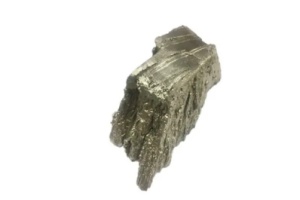
While rare earth metals are essential for technological advancement, their extraction and processing pose significant challenges. The extraction process is not only costly but also environmentally damaging, leading to concerns about sustainability and ethical sourcing.
The extraction of rare earth metals typically involves mining processes that can result in environmental degradation. Large-scale mining operations often produce significant amounts of toxic waste, and the refining processes can lead to air and water pollution. These operations have been linked to land degradation, water contamination, and deforestation in areas where rare earth metals are mined.
One of the most significant challenges is the disposal of by-products that are often highly toxic, which makes the mining process harmful to the environment and local communities. As such, there is an increasing focus on finding environmentally responsible mining practices or alternatives, such as recycling rare earth elements.
The global supply of rare earth metals is heavily concentrated in a few countries, particularly China, which controls a large percentage of the world’s rare earth production. This concentration creates supply chain vulnerabilities, as geopolitical tensions or trade restrictions can disrupt access to these crucial materials.
As industries around the world rely more heavily on rare earth metals, the need for diversifying supply chains has become apparent. Countries and companies are increasingly looking to secure alternative sources or develop domestic production capabilities to reduce dependency on a single region.
Recycling rare earth metals is not an easy task. While rare earth elements can theoretically be recovered from electronic waste, the recycling process is often inefficient and costly. The extraction of rare earths from used electronics and other products remains a challenge, primarily due to the complexity of separating these materials from other components.
Advancements in recycling technologies are underway, but the process is still in its early stages. More effective methods of recovering rare earth metals from old electronics could help alleviate some of the environmental and supply chain concerns.
At Ganzhou Wanfeng Advanced Materials Technology Co., Ltd., we are committed to providing high-quality rare earth metals while addressing environmental concerns. We actively engage in sustainable practices by ensuring that our materials are sourced responsibly and are compliant with industry standards for environmental protection.
Through our partnerships and industry expertise, we are working to:
· Promote recycling initiatives: Recovering rare earth materials from used products can reduce the need for mining.
· Adopt responsible mining practices: Supporting mining companies that prioritize environmental responsibility.
· Improve supply chain transparency: Working with trusted suppliers and ensuring ethical sourcing standards.
We are dedicated to advancing technologies and methods that minimize environmental impacts while ensuring the responsible use of rare earth metals.
Rare earth metals play an integral role in shaping the future of technology, energy, and medicine. Their unique properties make them essential for various high-tech industries, but the environmental and geopolitical challenges associated with their extraction must be addressed. By understanding the importance of these metals and their applications, we can appreciate how vital they are for innovation and progress.
At Ganzhou Wanfeng Advanced Materials Technology Co., Ltd., we are proud to offer a range of rare earth metals that support the growing demand for advanced materials across industries. Our commitment to sustainability and quality ensures that our products meet the highest standards for both performance and environmental responsibility.
Rare earth metals are used in high-tech applications such as electronics, renewable energy systems, medical devices, lighting, and defense technologies.
They have unique properties like high magnetic strength and electrical conductivity, making them essential for advanced technological systems and clean energy solutions.
Despite their name, rare earth metals are not actually rare but are difficult and costly to extract, making them scarce in easily accessible forms.
Recycling rare earth metals involves recovering materials from used electronics, batteries, and other waste products, although current recycling methods are still inefficient and in development.


